فاس نيوز ميديا جريدة الكترونية جهوية تعنى بشؤون و أخبار جهة فاس مكناس – متجددة على مدار الساعة

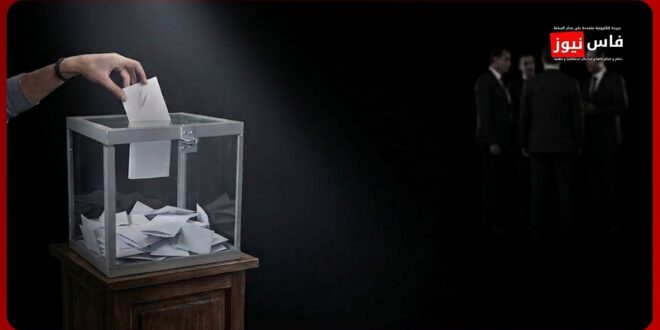
À l’approche des élections législatives prévues le 23 septembre prochain, la carte politique de la ville de Fès commence à révéler un phénomène frappant qui dépasse la simple compétition électorale traditionnelle. Plusieurs figures politiques et électorales passent désormais d’un parti et d’une couleur politique à l’autre à une vitesse remarquable, dans une situation qui soulève une question plus large sur la place de l’appartenance partisane dans la politique locale : le parti représente-t-il encore, pour certains candidats, un projet politique et une institution idéologique, ou est-il devenu une simple « casquette électorale » que l’on change chaque fois que les chances de victoire évoluent ?
L’un des exemples les plus marquants de cette dynamique vient de la province de Boulemane, où Mohamed Chouki est passé de l’Authenticité et Modernité au Rassemblement national des indépendants, après que son père, Ahmed Chouki, eut été député du « PAM » dans la même circonscription entre 2016 et 2021. Mohamed Chouki a ensuite remporté un siège à Boulemane en 2021 sous les couleurs du RNI, avant de gravir les échelons au sein du parti jusqu’à la présidence de son groupe parlementaire, puis à la tête du Rassemblement national des indépendants en 2026.
Dans l’autre sens, le nom de Khalid El Ajli s’est distingué. Il était auparavant associé au Rassemblement national des indépendants avant d’apparaître comme candidat du Mouvement populaire à Fès Sud. Dans le même temps, le « Mouvement populaire » a choisi, à Fès Nord, Rim Chabat, fille de Hamid Chabat, ancien secrétaire général du Parti de l’Istiqlal et ancien maire de Fès, après le passage de « l’équipe » politique de Chabat du Front des forces démocratiques au Mouvement populaire.
Ainsi, l’électeur ne se retrouve plus face à une carte partisane stable au sens traditionnel du terme : les figures se déplacent, les alliances changent, et le candidat qui apparaît aujourd’hui sous une couleur politique donnée peut avoir participé à une échéance précédente sous une autre couleur. Les partis cherchent également à attirer les uns les autres à la recherche du nom capable de ramener des voix, avant même de rechercher le militant capable de défendre le projet du parti.
Le paradoxe est que les partis eux-mêmes présentent souvent ces transformations comme un recrutement de compétences et un renforcement de l’offre politique, ce qui est légitime dans la vie partisane. Cependant, la multiplication des changements en peu de temps rend également légitime une autre question : est-ce désormais le parti qui donne sa valeur au candidat, ou le candidat qui apporte ses voix au parti ?
Abonnement aux plateformes d’information
La question devient encore plus sensible lorsqu’il s’agit des élections législatives, car l’enjeu ne concerne pas seulement un siège à la Chambre des représentants, mais également l’accès à l’institution législative, aux postes d’influence, aux commissions parlementaires et aux centres de décision.
Le parcours de Mohamed Chouki constitue un exemple clair de l’ampleur de la transformation que peut produire un changement de parti. Il a commencé son expérience politique au sein de l’Authenticité et Modernité, avant de rejoindre le RNI, puis de devenir parlementaire et président du groupe parlementaire, avant de prendre la tête du parti. Un parcours qui illustre un passage effectif d’une couleur politique à une autre, puis vers une position très avancée au sein de l’institution politique.
À Fès, le phénomène semble encore plus visible à l’approche du scrutin, notamment dans les circonscriptions de Fès Nord et Fès Sud, où plusieurs partis se disputent seulement quatre sièges dans chacune d’elles. La valeur individuelle du candidat et sa capacité à mobiliser les voix peuvent ainsi parfois prendre le dessus sur l’identité idéologique du parti.
C’est ainsi qu’une expression résumant la situation a commencé à apparaître dans le débat politique local : « le parti est devenu une couleur et le candidat est devenu la marque ».
L’électeur peut se retrouver face à un candidat qu’il connaît depuis des années, mais qu’il ne retrouve pas nécessairement sous la couleur politique à laquelle il était habitué, tandis que le parti peut être prêt à accorder son investiture à une personne venant d’une autre organisation politique s’il estime qu’elle possède les capacités nécessaires pour gagner.
Ce phénomène n’est pas propre à un seul parti ou à un seul courant. Les données qui circulent dans le cadre des préparatifs actuels révèlent des mouvements et des recrutements entre plusieurs partis, tandis que les positions de certaines figures évoluent en fonction des calculs des circonscriptions électorales et des possibilités d’investiture. Le RNI a également annoncé que le taux de renouvellement de ses candidats pour les échéances de 2026 dépasse 36 %, ce qui traduit à son tour une recomposition d’une partie des figures qui participeront aux élections.
Mais la question qui s’impose avec force à Fès est la suivante : que reste-t-il du « militant partisan » à une époque où passer d’un parti à un autre est devenu possible, et parfois rapide, à mesure que les élections approchent ?
Sommes-nous face à une évolution naturelle de la vie partisane, où le responsable politique est libre de choisir le cadre qui lui correspond ? Ou face à un pragmatisme électoral excessif faisant du siège parlementaire l’objectif, tandis que la couleur politique devient simplement un moyen d’y parvenir ?
Entre ceux qui voient dans ces mouvements une ouverture partisane et un recrutement de compétences, et ceux qui y voient le signe d’un affaiblissement de l’identité partisane et d’une transformation des élections en marché des candidats et des voix, le jugement final revient à l’électeur.
Mais une chose est certaine : les élections de 2026 à Fès ne proposent pas seulement une bataille entre le RNI, le PAM, l’Istiqlal, le Mouvement populaire, l’Union socialiste, le Parti de la justice et du développement, le Parti du progrès et du socialisme et d’autres formations. Elles constituent également un véritable test autour d’une question plus fondamentale :
L’électeur fassi vote-t-il pour le parti et son programme, ou pour le nom qu’il connaît, quelle que soit la casquette ou la couleur qu’il porte ?
En attendant la réponse des urnes, il semble que le TGV politique de Fès soit encore à la gare des investitures, et que d’autres stations pourraient encore apparaître avant le jour du scrutin.
As the legislative elections scheduled for September 23 approach, the political map of the city of Fez is beginning to reveal a striking phenomenon that goes beyond traditional electoral competition. A number of political and electoral figures are now moving between parties and political colors at a remarkable pace, raising a broader question about the place of party affiliation in local politics: does the party still represent, for some candidates, a political project and an ideological institution, or has it become merely an “electoral cap” that can be changed whenever the chances of victory change?
One of the most prominent examples of this dynamic comes from Boulemane Province, where Mohamed Chouki moved from the Authenticity and Modernity Party to the National Rally of Independents, after his father, Ahmed Chouki, had served as a PAM deputy in the same constituency between 2016 and 2021. Mohamed Chouki then won a seat in Boulemane in 2021 under the RNI banner, before rising within the party to become head of its parliamentary group and eventually leader of the National Rally of Independents in 2026.
In the opposite direction, the name of Khalid El Ajli emerged. He had previously been associated with the National Rally of Independents before appearing as a candidate for the Popular Movement in Southern Fez. Meanwhile, the “Popular Movement” chose Rim Chabat in Northern Fez, the daughter of Hamid Chabat, former secretary-general of the Istiqlal Party and former mayor of Fez, after Chabat’s political “team” moved from the Front of Democratic Forces to the Popular Movement.
Thus, voters are no longer facing a fixed party map in the traditional sense: political figures move, alliances change, and a candidate appearing today under one political color may have contested a previous election under another. Parties are also attracting figures from one another in search of names capable of bringing in votes, sometimes before seeking militants capable of defending the party’s political project.
The paradox is that parties themselves often present these transformations as the recruitment of qualified figures and the strengthening of the political offering, which is legitimate in party life. However, the frequency of these moves over short periods also makes another question legitimate: has the party become the entity that gives the candidate his value, or is the candidate the one who brings his votes to the party?
The question becomes even more significant when it comes to legislative elections, where the stakes concern not only a seat in the House of Representatives, but also access to the legislative institution, positions of influence, parliamentary committees, and decision-making centers.
Mohamed Chouki’s political trajectory provides a clear example of the scale of transformation that a party switch can create. He began his political career within the Authenticity and Modernity Party, then moved to the RNI, before becoming a parliamentarian and parliamentary group leader, and ultimately heading the party. It is a trajectory that illustrates an actual move from one political color to another and then into a highly influential position within the political institution.
In Fez, the phenomenon appears even more visible as election day approaches, particularly in the Northern Fez and Southern Fez constituencies, where several parties are competing for only four seats in each constituency. The individual value of candidates and their ability to mobilize voters can therefore sometimes outweigh the ideological identity of the party.
This is where an expression summarizing the situation has begun to emerge in the local political debate: “the party has become a color, and the candidate has become the brand.”
Voters may find themselves facing a candidate they have known for years, but not necessarily under the political color they were accustomed to seeing, while a party may be willing to grant its nomination to someone coming from another political organization if it believes that person has the ability to win.
This phenomenon is not limited to one party or one political current. Information circulating during the current preparations reveals movements and recruitment between several parties, while the positions of some political figures are changing according to the calculations of electoral constituencies and nomination opportunities. The RNI has also announced that the rate of renewal among its candidates for the 2026 elections exceeds 36%, which in turn reflects the reshaping of part of the political figures who will contest the elections.
But the question that strongly imposes itself in Fez is: what remains of the “party militant” in an era when moving from one party to another has become possible, and sometimes rapid, whenever the elections approach?
Are we witnessing a natural development of party life, in which politicians have the right to choose the political framework that suits them? Or are we facing excessive electoral pragmatism in which the parliamentary seat becomes the objective, while the party color becomes merely the means of reaching it?
Between those who see these movements as party openness and the recruitment of qualified figures, and those who consider them evidence of weakened party identity and the transformation of elections into a market for candidates and votes, the final judgment remains with the voter.
But one thing is certain: the 2026 elections in Fez do not merely present a contest between the RNI, PAM, Istiqlal, Popular Movement, Socialist Union, Justice and Development Party, Progress and Socialism Party, and others. They also represent a genuine test of a broader question:
Does the Fassi voter vote for the party and its program, or for the name they know, regardless of the political cap or color it wears?
While awaiting the answer from the ballot boxes, it seems that the political TGV in Fez is still at the nomination station, and there may be other stations before election day.
Source: Fès News Media