فاس نيوز ميديا جريدة الكترونية جهوية تعنى بشؤون و أخبار جهة فاس مكناس – متجددة على مدار الساعة

Rabat – Consultations to form Morocco’s new government have entered a new phase after several political parties set out their positions on joining the government that Fatima Zahra Mansouri has been tasked with forming, following her appointment by King Mohammed VI as Head of Government after the Authenticity and Modernity Party (PAM) came first in the legislative elections held on September 23, 2026.
In this context, the National Council of the Authenticity and Modernity Party, meeting in an extraordinary session on Saturday, October 3, at the Conference Palace in Skhirat, decided to authorize the consultation committee to continue negotiations with the various political parties, with the aim of shaping the contours of the next government majority.
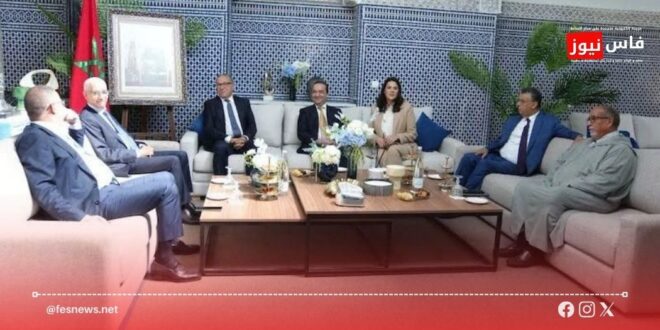
The consultation committee includes Fatima Zahra Mansouri, Fouzi Lekjaa, Ahmed Akhchichine and Abdelatif Ouahbi. The party tasked the committee with continuing contacts with the various political formations as part of consultations, openness and efforts to reach the compromises necessary to form the majority.
During the meeting of the party’s National Council, Mansouri said that the royal confidence she had received to form the government represented a “great national responsibility,” stressing the need to form a government team capable of responding to Moroccans’ expectations and translating them into public policies and tangible results.
She also considered that this confidence places on the Authenticity and Modernity Party the responsibility of forming a strong and effective government in managing public affairs, noting that the appointment of a woman as head of government represents a “historic moment” for Morocco and an important milestone for the party in terms of Moroccan women’s participation in institution-building and the management of public affairs.
Mansouri also addressed the turnout in the legislative elections, which reached 38 percent, considering that this places a greater responsibility on political parties to restore citizens’ trust and strengthen their ties with institutions and political parties.
Regarding the consultations, she explained that the Authenticity and Modernity Party had announced from the outset its openness to dialogue with all political parties without exception, with the aim of building a majority capable of assuming the responsibilities of the next phase. She also stressed that competence would be a decisive criterion in selecting members of the government, alongside experience, the ability to assume responsibilities and the implementation of electoral commitments.
Alongside the Authenticity and Modernity Party’s moves, the National Rally of Independents (RNI) announced its readiness to participate in the next government. Its National Council, meeting in an extraordinary session on Saturday in Rabat, decided to authorize the party’s president, Mohamed Choukri, to manage its participation in the next government.
The party praised the legislative election results it achieved, despite their decline compared with the previous election, considering them a reflection of its political strength and ability to withstand the circumstances. It also expressed its pride in the record of its participation in the previous government term and in what it described as structural reforms implemented in a complex national and international context.
The National Rally of Independents’ position came amid the openness shown by the Authenticity and Modernity Party toward the various political parties with a view to forming a majority. The party’s National Council therefore extended its congratulations to the leadership and members of the Authenticity and Modernity Party on coming first in the elections, affirming its respect for voters’ will and the results of the ballot boxes. It also congratulated Fatima Zahra Mansouri on her appointment as Head of Government.
For its part, the Istiqlal Party set out its position on the consultations after its National Council, meeting in an extraordinary session on Saturday in the city of Salé, decided to authorize the party’s Secretary-General, Nizar Baraka, to lead negotiations concerning its participation in the next government.
The party explained that the decision was taken in the supreme interest of the nation and citizens, as well as reflecting its desire to be a key player in the process of institution-building, economic modernization and social development, enabling it to fulfill its commitments to citizens.
The National Council of the Istiqlal Party affirmed its readiness to contribute to the next phase and launch a new dynamic of reform aimed at bringing about tangible change in citizens’ lives.
Nizar Baraka stressed that the party’s participation in the next government remains conditional on incorporating its commitments contained in its electoral program into the government program, considering these commitments to be a political and moral contract with citizens. He also pointed to several areas of convergence between the Istiqlal Party’s program and that of the Authenticity and Modernity Party, calling for them to be taken into consideration during the ongoing consultations.
In the same context, the Constitutional Union tasked its Secretary-General, Mohamed Goudar, with leading consultations concerning its participation in the government, after its Political Bureau unanimously decided to grant him “full powers” to take whatever decisions he deemed necessary, while emphasizing the need to preserve the party’s position and serve the supreme interest of the nation.
The Constitutional Union linked its position on future participation to the degree of convergence between the programs and the next government’s ability to respond to citizens’ expectations, placing among its priorities the preservation of purchasing power, support for employment and the strengthening of the social state.
As for the Popular Movement, its National Council authorized its Secretary-General, Mohamed Ouzzine, to continue political consultations with the designated Head of Government and make the decision regarding participation in the next government, while taking into account the supreme interest of the nation, serving citizens, and the party’s constants, principles and commitments.
Ouzzine set conditions for participation in the government, foremost among them the incorporation of a “minimum” of the Popular Movement’s electoral commitments into the government program, considering them commitments that constitute a contract with voters.
The party also demanded that its political and historical weight and its experience be taken into consideration, whether when it is part of the majority or the opposition, stressing that any participation by the party within state institutions should allow it to play an influential and effective role in defending citizens’ concerns and translating its electoral commitments into practical initiatives and programs.
Regarding the results of the September 23 elections, the Popular Movement acknowledged its decline in several of its traditional strongholds, while affirming that it had maintained its presence on the national political scene.
These successive positions indicate that consultations to form the government have entered a phase of negotiations over the nature of the next majority, its program and its priorities, while the committee authorized by the Authenticity and Modernity Party continues its contacts with the various political parties, as the formations concerned begin defining their conditions and priorities before deciding on their participation in the next government.
Formation du nouveau gouvernement marocain : les partis définissent leurs positions et leurs conditions de participation au gouvernement de Mansouri
Rabat – Les consultations en vue de la formation du nouveau gouvernement marocain sont entrées dans une nouvelle phase, après que plusieurs partis politiques ont défini leurs positions concernant leur participation au gouvernement dont la formation a été confiée à Fatima Zahra Mansouri, à la suite de sa nomination par le Roi Mohammed VI au poste de cheffe du gouvernement, après l’arrivée en tête du Parti authenticité et modernité (PAM) lors des élections législatives tenues le 23 septembre 2026.
Dans ce contexte, le Conseil national du Parti authenticité et modernité, réuni en session extraordinaire samedi 3 octobre au Palais des congrès de Skhirat, a décidé de mandater la commission chargée des consultations pour poursuivre les négociations avec les différents partis politiques, en vue de définir les contours de la prochaine majorité gouvernementale.
La commission chargée des consultations comprend Fatima Zahra Mansouri, Fouzi Lekjaa, Ahmed Akhchichine et Abdelatif Ouahbi. Le parti lui a confié la poursuite des contacts avec les différentes formations politiques, dans le cadre de la concertation, de l’ouverture et de la recherche des compromis nécessaires à la formation de la majorité.
Lors de la réunion du Conseil national du parti, Mansouri a affirmé que la confiance royale dont elle a bénéficié pour former le gouvernement représente une « grande responsabilité nationale », soulignant la nécessité de constituer une équipe gouvernementale capable de répondre aux attentes des Marocains et de les traduire en politiques publiques et en résultats concrets.
Elle a également estimé que cette confiance impose au Parti authenticité et modernité la responsabilité de former un gouvernement fort et efficace dans la gestion des affaires publiques, soulignant que la nomination d’une femme à la tête du gouvernement constitue un « moment historique » pour le Maroc, ainsi qu’une étape importante pour le parti en matière de participation des femmes marocaines à la construction des institutions et à la gestion des affaires publiques.
Mansouri s’est également arrêtée sur le taux de participation aux élections législatives, qui a atteint 38 %, considérant que ce taux impose aux partis politiques une responsabilité accrue pour regagner la confiance des citoyens et renforcer leurs liens avec les institutions et les partis.
Concernant les consultations, elle a expliqué que le Parti authenticité et modernité avait annoncé dès le départ son ouverture au dialogue avec l’ensemble des partis, sans exception, afin de construire une majorité capable d’assumer les responsabilités de la prochaine étape. Elle a également confirmé que le critère de compétence sera déterminant dans le choix des membres du gouvernement, aux côtés de l’expérience, de la capacité à assumer les responsabilités et de la mise en œuvre des engagements électoraux.
Parallèlement à l’action du Parti authenticité et modernité, le Rassemblement national des indépendants (RNI) a annoncé sa disposition à participer au prochain gouvernement. Son Conseil national, réuni en session extraordinaire samedi à Rabat, a décidé de mandater le président du parti, Mohamed Choukri, pour gérer sa participation au prochain gouvernement.
Le parti s’est félicité des résultats qu’il a obtenus lors des élections législatives, malgré leur recul par rapport au précédent scrutin, estimant qu’ils reflètent sa force politique et sa capacité de résistance. Il a également exprimé sa fierté à l’égard du bilan de sa participation à la précédente législature gouvernementale et de ce qu’il a décrit comme des réformes structurelles mises en œuvre dans un contexte national et international complexe.
La position du Rassemblement national des indépendants intervient dans le contexte de l’ouverture affichée par le Parti authenticité et modernité à l’égard des différents partis en vue de former la majorité. Le Conseil national du parti a ainsi adressé ses félicitations à la direction et aux militants du Parti authenticité et modernité à l’occasion de son arrivée en tête des élections, affirmant respecter la volonté des électeurs et les résultats des urnes. Il a également félicité Fatima Zahra Mansouri à l’occasion de sa nomination au poste de cheffe du gouvernement.
De son côté, le Parti de l’Istiqlal a défini sa position concernant les consultations, après que son Conseil national, réuni en session extraordinaire samedi dans la ville de Salé, a décidé de mandater le secrétaire général du parti, Nizar Baraka, pour diriger les négociations relatives à sa participation au prochain gouvernement.
Le parti a expliqué que cette décision intervient dans l’intérêt supérieur de la Nation et des citoyens, ainsi que dans sa volonté d’être un acteur essentiel du processus de construction des institutions, de modernisation économique et de développement social, de manière à lui permettre de respecter ses engagements envers les citoyens.
Le Conseil national du Parti de l’Istiqlal a affirmé sa disposition à contribuer à la prochaine étape et à insuffler une nouvelle dynamique aux réformes, dans le but d’apporter un changement concret dans la vie des citoyens.
Nizar Baraka a souligné que la participation du parti au prochain gouvernement demeure liée à l’intégration de ses engagements contenus dans son programme électoral au sein du programme gouvernemental, considérant ces engagements comme un contrat politique et moral avec les citoyens. Il a également relevé l’existence de plusieurs points de convergence entre le programme du Parti de l’Istiqlal et celui du Parti authenticité et modernité, appelant à en tenir compte au cours des consultations en cours.
Dans le même contexte, l’Union constitutionnelle a chargé son secrétaire général, Mohamed Goudar, de diriger les consultations relatives à sa participation au gouvernement, après que son bureau politique a décidé à l’unanimité de lui accorder « les pleins pouvoirs » pour prendre les décisions qu’il jugera nécessaires, tout en veillant à préserver la position du parti et à servir l’intérêt supérieur de la Nation.
L’Union constitutionnelle a lié sa position sur sa prochaine participation au degré de convergence entre les programmes et à la capacité du prochain gouvernement à répondre aux attentes des citoyens, plaçant parmi ses priorités la préservation du pouvoir d’achat, le soutien à l’emploi et le renforcement de l’État social.
Quant au Mouvement populaire, son Conseil national a mandaté son secrétaire général, Mohamed Ouzzine, pour poursuivre les consultations politiques avec la cheffe du gouvernement désignée et prendre la décision concernant sa participation au prochain gouvernement, en tenant compte de l’intérêt supérieur de la Nation, du service des citoyens ainsi que des constantes, principes et engagements du parti.
Ouzzine a posé des conditions à la participation au gouvernement, dont la principale consiste à intégrer un « minimum » des engagements électoraux du Mouvement populaire dans le programme gouvernemental, considérant qu’il s’agit d’engagements constituant un contrat avec les électeurs.
Le parti a également exigé que son poids politique et historique ainsi que son expérience soient pris en considération, tant lorsqu’il se trouve dans la majorité que dans l’opposition, affirmant que toute participation de sa part au sein des institutions devrait lui permettre de jouer un rôle influent et efficace dans la défense des préoccupations des citoyens et dans la traduction de ses engagements électoraux en initiatives et programmes concrets.
Concernant les résultats des élections du 23 septembre, le Mouvement populaire a reconnu son recul dans plusieurs de ses fiefs traditionnels, tout en affirmant avoir conservé sa présence sur la scène politique nationale.
Ces positions successives indiquent que les consultations en vue de la formation du gouvernement sont entrées dans une phase de négociation portant sur la nature de la prochaine majorité, son programme et ses priorités, alors que la commission mandatée par le Parti authenticité et modernité poursuit ses contacts avec les différents partis politiques, tandis que les formations concernées commencent à définir leurs conditions et leurs priorités avant de trancher la question de leur participation au prochain gouvernement.
Source : Fès News Media