Fes News Media Morocco & Fez-Meknes Independent English News Portal — 24/7 Coverage

- 25 on the protection of stray animals and the prevention of the risks they may cause has officially entered into force following its publication in Official Gaz...
- 7533, after being promulgated under Dahir No
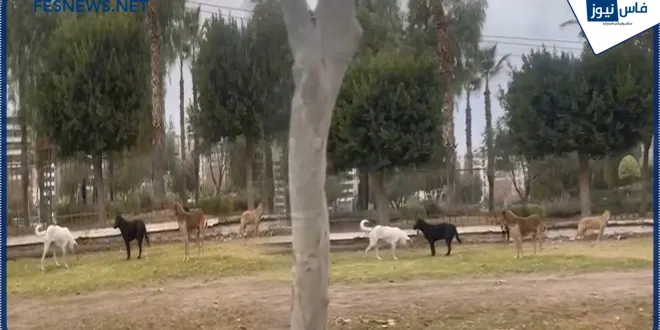
Morocco – Law No. 19.25 on the protection of stray animals and the prevention of the risks they may cause has officially entered into force following its publication in Official Gazette No. 7533, after being promulgated under Dahir No. 1.26.55 dated July 28, 2026. The law establishes new rules governing the management of stray animals and introduces new obligations for owners of domestic animals, along with financial and custodial penalties for violators.
Draft Law No. 19.25 was adopted by the House of Representatives on June 29, before being approved without amendment, on second reading, by the House of Councillors on July 7. It was subsequently promulgated by dahir and published in the Official Gazette, thereby becoming officially applicable.
Among the main new provisions introduced by the law is the obligation for all owners of domestic animals to have a health record for each animal and to register it on an electronic platform dedicated to this purpose, in addition to assigning it a permanent identification number.
The law also requires any change in ownership of an animal to be declared within a period not exceeding 24 hours, while the disappearance of an animal must be reported within a maximum period of three days.
Those who violate the identification and registration requirements are subject to a fine ranging from 1,000 to 5,000 dirhams.
Among the provisions of the new law that have attracted particular attention is the prohibition on citizens feeding, treating or sheltering stray animals in public spaces outside the legal framework provided for this purpose, with a fine ranging from 500 to 2,000 dirhams.
This provision aims to centralize the care of stray animals within the specialized centers provided for by the law, instead of carrying out such operations individually in public spaces.
Under the new law, municipalities are responsible for establishing centers for the care of stray animals. These centers are tasked with capturing the animals, assessing their health condition, feeding and treating them, as well as implementing sterilization programs aimed at limiting their reproduction.
After being vaccinated and identified, the animals may be returned to their original environment or offered for adoption, in accordance with the provisions and procedures set out in the law.
The law also allows municipalities to conclude agreements with specialized associations or private-sector operators to manage stray animal care centers, provided that the strict health and safety standards established by the legislation are respected.
Conversely, establishing or managing a center without obtaining the required authorization is punishable by a fine ranging from 50,000 to 300,000 dirhams.
The text also strengthens penalties relating to acts of cruelty and mistreatment of animals.
Anyone who intentionally kills, tortures or mistreats a stray animal is liable to imprisonment for two to six months and a fine ranging from 5,000 to 20,000 dirhams, or to one of these two penalties alone.
Anyone who intentionally exposes an animal to danger is also subject to a fine ranging from 5,000 to 20,000 dirhams.
Anyone who intentionally causes an animal to become lost or leaves it to roam unsupervised in a public space may face a fine ranging from 10,000 to 20,000 dirhams.
The law also increases the penalty for anyone who obstructs the work of the committees or centers provided for under the legislation, with the punishment reaching one to three months in prison and a fine ranging from 10,000 to 35,000 dirhams.
With the entry into force of Law No. 19.25, the issue of stray animals is now governed by a set of new rules, including the responsibility of domestic animal owners to identify and register their animals, the regulation of changes in ownership and the reporting of disappearances, as well as the organization of stray animal care within centers specifically designated for this purpose.
The law also establishes a framework for the involvement of municipalities, specialized associations and the private sector in this field, with vaccination, identification and sterilization adopted as part of the management mechanisms, while strengthening penalties for animal mistreatment or obstructing the work of bodies responsible for caring for them.
Maroc – La loi n° 19.25 relative à la protection des animaux errants et à la prévention des risques qu’ils peuvent causer est officiellement entrée en vigueur, après sa publication au Bulletin officiel n° 7533, à la suite de sa promulgation par le dahir n° 1.26.55 du 28 juillet 2026. Elle établit de nouvelles règles encadrant la gestion des animaux errants et fixe de nouvelles obligations pour les détenteurs d’animaux domestiques, ainsi que des sanctions financières et pénales à l’encontre des contrevenants.
Le projet de loi n° 19.25 avait été adopté par la Chambre des représentants le 29 juin dernier, avant d’être approuvé sans modification, en deuxième lecture, par la Chambre des conseillers le 7 juillet. Il a ensuite été promulgué par dahir et publié au Bulletin officiel, devenant ainsi officiellement applicable.
Parmi les principales nouveautés introduites par la loi figure l’obligation pour tous les détenteurs d’animaux domestiques de disposer d’un carnet sanitaire pour chaque animal et de l’enregistrer sur une plateforme électronique dédiée à cet effet, en plus de lui attribuer un numéro d’identification permanent.
La loi impose également de déclarer tout changement de propriété de l’animal dans un délai ne dépassant pas 24 heures, tandis que la disparition de l’animal doit être signalée dans un délai maximum de trois jours.
Les contrevenants aux dispositions relatives à l’identification et à l’enregistrement s’exposent à une amende comprise entre 1 000 et 5 000 dirhams.
Parmi les dispositions du nouveau texte qui ont particulièrement retenu l’attention figure l’interdiction faite aux citoyens de nourrir, soigner ou héberger des animaux errants dans l’espace public en dehors du cadre légal prévu à cet effet, avec une amende allant de 500 à 2 000 dirhams.
Cette disposition vise à recentrer les opérations de prise en charge des animaux errants au sein des centres spécialisés prévus par la loi, au lieu de mener ces opérations individuellement dans les espaces publics.
En vertu de la nouvelle loi, les communes sont responsables de la création de centres de prise en charge des animaux errants, chargés de capturer ces animaux, d’évaluer leur état de santé, de les nourrir et de les soigner, ainsi que de mettre en œuvre des programmes de stérilisation afin de limiter leur reproduction.
Après leur vaccination et leur identification, les animaux peuvent être remis dans leur environnement d’origine ou proposés à l’adoption, conformément aux dispositions et procédures prévues.
La loi autorise également les communes à conclure des conventions avec des associations spécialisées ou des opérateurs du secteur privé afin d’assurer la gestion des centres de prise en charge des animaux errants, sous réserve du respect des normes sanitaires et de sécurité strictes fixées par le texte.
En revanche, la création ou la gestion d’un centre sans l’obtention de l’autorisation nécessaire est passible d’une amende comprise entre 50 000 et 300 000 dirhams.
Le texte a également renforcé les sanctions relatives aux actes de cruauté et à la maltraitance des animaux.
Toute personne qui tue, torture ou maltraite intentionnellement un animal errant est passible d’une peine d’emprisonnement de deux à six mois et d’une amende comprise entre 5 000 et 20 000 dirhams, ou de l’une seulement de ces deux peines.
Est également puni d’une amende comprise entre 5 000 et 20 000 dirhams quiconque expose intentionnellement un animal à un danger.
Toute personne qui provoque intentionnellement la perte d’un animal ou le laisse errer sans surveillance dans l’espace public peut être condamnée à une amende comprise entre 10 000 et 20 000 dirhams.
La loi alourdit également la sanction contre toute personne qui entrave le travail des commissions ou des centres prévus par le texte, la peine pouvant atteindre un à trois mois d’emprisonnement ainsi qu’une amende comprise entre 10 000 et 35 000 dirhams.
Avec l’entrée en vigueur de la loi n° 19.25, la gestion de la question des animaux errants est désormais encadrée par un ensemble de nouvelles règles, comprenant la responsabilité des propriétaires d’animaux domestiques en matière d’identification et d’enregistrement, la réglementation des changements de propriété et de la déclaration des disparitions, ainsi que l’organisation de la prise en charge des animaux errants dans des centres dédiés à cet effet.
La loi établit également un cadre pour l’intervention des communes, des associations spécialisées et du secteur privé dans ce domaine, en intégrant la vaccination, l’identification et la stérilisation parmi les mécanismes de gestion, tout en renforçant les sanctions contre la maltraitance des animaux ou l’entrave au travail des organismes chargés de leur prise en charge.
Source: Fes News Media