فاس نيوز ميديا جريدة الكترونية جهوية تعنى بشؤون و أخبار جهة فاس مكناس – متجددة على مدار الساعة

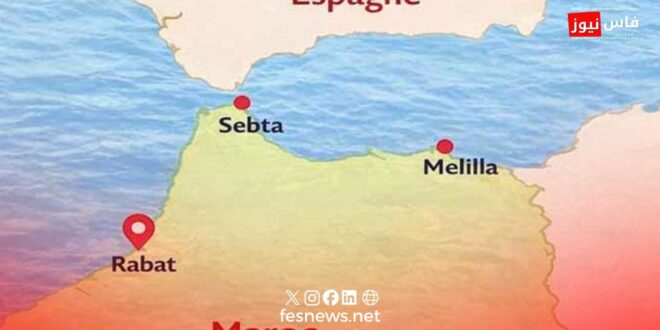
Melilla occupée – Les appels se multiplient au sein de la ville de Melilla occupée pour s’inspirer du récent accord conclu entre l’Union européenne et le Royaume-Uni concernant Gibraltar, dans le but d’assouplir les restrictions de circulation à la frontière avec la ville de Nador et de renforcer la coopération économique et sociale entre les deux parties.
Ces revendications interviennent après l’entrée en vigueur, le 15 juillet 2026, de l’accord relatif à Gibraltar, que le Premier ministre espagnol Pedro Sánchez a qualifié de texte mettant fin à ce qu’il a décrit comme « le dernier mur de l’Europe continentale ».
Dans ce contexte, le parti local Nueva Melilla a appelé à œuvrer, à terme, pour la suppression de la clôture frontalière séparant la ville occupée de son environnement marocain, estimant qu’une telle mesure pourrait ouvrir une nouvelle phase de coopération avec la ville de Nador, notamment dans les domaines de l’investissement et du développement commun.
Le parti a souligné que le renforcement des relations avec le Maroc n’impliquait pas une modification des positions politiques des parties concernées, mais visait plutôt à créer un espace de développement économique et social au bénéfice des populations vivant des deux côtés de la frontière.
De son côté, la Commission islamique de Melilla a estimé que les frontières de demain devraient devenir des espaces favorisant la prospérité, la confiance et la coexistence, plutôt que de constituer uniquement un instrument de contrôle sécuritaire.
Les deux organisations ont proposé l’adoption d’un modèle proche de celui appliqué à Gibraltar, fondé sur l’utilisation des technologies modernes pour faciliter les contrôles, la création d’un groupe de travail maroco-espagnol, ainsi que le transfert de l’essentiel des procédures d’inspection vers les ports et les aéroports afin de réduire la pression et les longues files d’attente observées aux postes-frontières de Melilla et de Ceuta.
Ces prises de position s’inscrivent dans le contexte du débat en cours sur l’avenir des postes-frontières entre le Maroc et les deux enclaves occupées, à la lumière des évolutions qu’ont connues les relations maroco-espagnoles ces dernières années.
Occupied Melilla: Calls to Draw Inspiration from the Gibraltar Agreement and Remove the Border Barrier with Nador
Occupied Melilla – Calls are growing within the city of occupied Melilla to draw inspiration from the recent agreement between the European Union and the United Kingdom regarding Gibraltar, with the aim of easing cross-border movement with the Moroccan city of Nador and strengthening economic and social cooperation between both sides.
These calls come after the Gibraltar agreement officially entered into force on 15 July 2026, an agreement that Spanish Prime Minister Pedro Sánchez described as bringing an end to what he called “the last wall in continental Europe.”
In this context, the local political party Nueva Melilla called for future efforts to remove the border fence separating the occupied city from its Moroccan surroundings, arguing that such a move could pave the way for a new phase of cooperation with the city of Nador, particularly in the fields of investment and joint development.
The party stressed that strengthening relations with Morocco does not imply changing the political positions of the parties concerned, but rather seeks to create a space for economic and social development that serves the interests of people living on both sides of the border.
Meanwhile, the Islamic Commission of Melilla stated that the borders of the future should become spaces that promote prosperity, trust, and peaceful coexistence, rather than serving solely as instruments of security control.
Both organizations proposed adopting a model similar to the one implemented in Gibraltar, based on the use of modern technologies to facilitate border controls, the establishment of a Moroccan-Spanish working group, and the transfer of most inspection procedures to ports and airports in order to reduce congestion and long waiting times at the Melilla and Ceuta border crossings.
These positions come amid the ongoing debate over the future of border crossings between Morocco and the two occupied enclaves, against the backdrop of the evolving Moroccan-Spanish relations in recent years.
Source:Fès News Media