فاس نيوز ميديا جريدة الكترونية جهوية تعنى بشؤون و أخبار جهة فاس مكناس – متجددة على مدار الساعة

Ifrane – Fès News
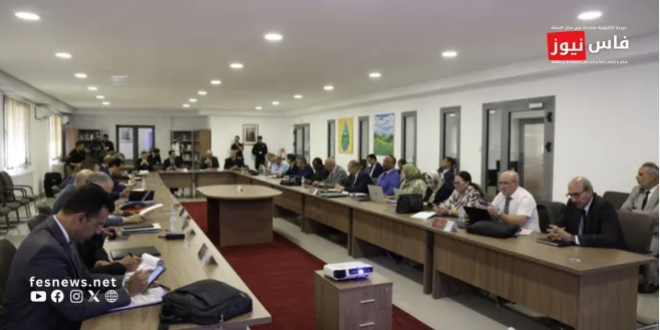
Les participants à une rencontre organisée à Ifrane sur une période de trois jours ont appelé au renforcement de la coordination et de la coopération entre les différents acteurs institutionnels, sécuritaires et judiciaires afin de protéger les ressources naturelles et la biodiversité face aux menaces croissantes des activités criminelles. Ils ont souligné la nécessité d’adopter une approche intégrée combinant interventions de terrain, surveillance sécuritaire et enquêtes judiciaires.
Cette rencontre est organisée conjointement par la Direction Générale de la Sûreté Nationale (DGSN) et l’Agence Nationale des Eaux et Forêts, sous le thème : « Les partenariats dans la prévention et la lutte contre les crimes portant atteinte aux ressources forestières et à la faune sauvage : bilan, enjeux et perspectives ».
Tarik El Bazi, directeur de l’Institut Supérieur des Sciences de la Sécurité à Ifrane, a indiqué que l’abattage illégal des arbres, le transport, le stockage et le commerce illicites des produits forestiers causent d’importants dommages aux écosystèmes et à la biodiversité. Il a salué les efforts de l’Agence Nationale des Eaux et Forêts, de la DGSN, de la Gendarmerie Royale, de la Protection Civile et de l’Administration des Douanes et Impôts Indirects, sous la supervision des parquets compétents, dans la lutte contre ces infractions. Il a également insisté sur le rôle essentiel de la jurisprudence dans l’évolution du traitement des crimes environnementaux.
De son côté, Abdelkader Benabou, chef du département du domaine forestier à l’Agence Nationale des Eaux et Forêts, a expliqué que les atteintes aux ressources forestières, à la faune sauvage et à la biodiversité prennent de plus en plus la forme d’une criminalité organisée, pouvant parfois dépasser les frontières nationales, ce qui rend indispensable un renforcement de la coordination entre les différents intervenants.
Il a ajouté que la forêt marocaine constitue un pilier majeur de la stratégie nationale « Forêts du Maroc 2020-2030 », représentant un patrimoine écologique et économique. Il a précisé que l’Agence dresse environ 8 000 procès-verbaux d’infraction par an dans le domaine forestier depuis trois ans, tout en enregistrant une baisse notable du nombre d’infractions grâce aux efforts conjoints des différents partenaires.
Le responsable a également annoncé la signature d’accords avec plusieurs institutions sécuritaires et judiciaires afin de renforcer la coopération juridique, l’échange d’expertises, la coordination opérationnelle et la prévention des crimes environnementaux.
Pour sa part, Youssef Salek, directeur adjoint de l’Institut Supérieur des Sciences de la Sécurité à Ifrane, a souligné que cette rencontre constitue un espace d’échange entre responsables, magistrats, experts et représentants des administrations concernées, dans le but de développer une approche participative visant à lutter contre les crimes portant atteinte au patrimoine forestier et écologique national.
Le programme de la rencontre comprend des discussions sur les mécanismes de prévention et de lutte contre les crimes visant les forêts et la faune sauvage, ainsi qu’un bilan des partenariats existants et des défis et perspectives liés à la protection des ressources naturelles et au renforcement de la coordination institutionnelle.
Ifrane Hosts National Meeting to Strengthen Security and Judicial Coordination in Combating Forest-Related Crimes
Ifrane – Fès News
Participants in a three-day meeting held in Ifrane called for stronger coordination and cooperation among institutional, security, and judicial stakeholders to protect natural resources and biodiversity from the growing threats posed by criminal activities. They stressed the need for an integrated approach that combines field operations, security monitoring, and judicial investigations.
The event is jointly organized by Morocco’s General Directorate of National Security (DGSN) and the National Agency for Water and Forests under the theme: “Partnerships in Preventing and Combating Crimes Against Forest Resources and Wildlife: Achievements, Challenges, and Future Prospects.”
Tarik El Bazi, Director of the Higher Institute of Security Sciences in Ifrane, stated that illegal logging, as well as the unlawful transportation, storage, and trade of forest products, cause significant damage to ecosystems and biodiversity. He praised the efforts of the National Agency for Water and Forests, the DGSN, the Royal Gendarmerie, the Civil Protection Directorate, and the Customs and Indirect Tax Administration, working under the supervision of the competent public prosecutors, in combating these crimes. He also highlighted the important role of judicial jurisprudence in keeping pace with the evolution of environmental crime and improving its prosecution.
Abdelkader Benabou, Head of the Forest Estate Department at the National Agency for Water and Forests, explained that crimes targeting forest resources, wildlife, and biodiversity are increasingly taking the form of organized crime, sometimes extending beyond national borders, making stronger coordination among all stakeholders essential.
He added that Morocco’s forests are a key pillar of the national “Forests of Morocco 2020–2030” strategy, representing both an ecological and economic asset. He noted that the Agency has recorded approximately 8,000 forestry violation reports annually over the past three years, while observing a significant decline in the number of offenses thanks to joint efforts by partner institutions.
The official also announced the signing of cooperation agreements with several security and judicial bodies to strengthen legal cooperation, exchange expertise, enhance operational coordination, and improve the prevention of environmental crimes.
Meanwhile, Youssef Salek, Deputy Director of the Higher Institute of Security Sciences in Ifrane, emphasized that the meeting serves as a platform for exchanging expertise among officials, judges, experts, and representatives of relevant institutions, with the aim of developing a collaborative approach to combating crimes targeting Morocco’s forest and ecological heritage.
The meeting’s agenda includes discussions on mechanisms for preventing and combating crimes against forests and wildlife, as well as reviewing existing partnerships, current challenges, and future prospects for protecting natural resources and strengthening institutional coordination.
Source:Fès News Media