فاس نيوز ميديا جريدة الكترونية جهوية تعنى بشؤون و أخبار جهة فاس مكناس – متجددة على مدار الساعة

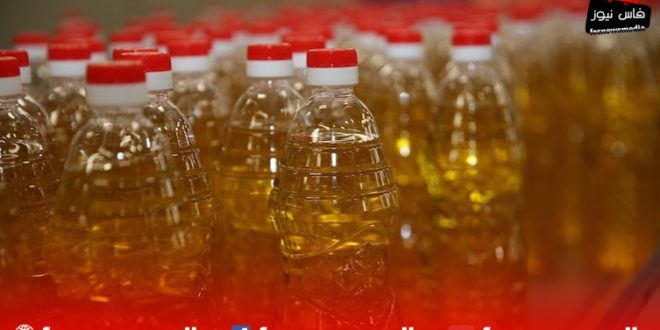
Earlier this week in Meknes, the official opening took place of a new technical center dedicated to supporting oilseed crops. This initiative seeks to strengthen close agricultural advisory services and contribute to structuring a production chain considered one of the key pillars of food security and sovereignty in the Kingdom.
The establishment of this center within the Meknes Agropôle comes at a national juncture marked by increasing climate challenges, growing pressure on natural resources, and rising import costs. These factors have made the development of crops such as rapeseed (canola) and sunflower a strategic choice to boost local production.
The project is based on a multi-stakeholder partnership bringing together Moroccan and international professional and institutional actors, with the aim of improving the performance of the value chain from farm to industry and ensuring its sustainability in the medium and long term. This will be achieved through direct technical support to farmers, improved seed quality, and the adoption of farming pathways adapted to local conditions.
In this context, Mohammed El Baraka, President of the Interprofessional Federation of Oilseed Crops, explained that the main challenge lies in strengthening national production, which currently covers only a limited share of market needs. He noted that the set objective is to gradually increase this share by 2030, by supporting upstream farming and enhancing industrial processing capacities.
For his part, Kamal Haidan, Regional Director of Agriculture for the Fes–Meknes Region, said that the launch of this center reflects collective mobilization to address climate change constraints, water scarcity, and market volatility. He emphasized that the success of agricultural value chains depends on the quality of agricultural extension services and effective coordination among all stakeholders.
The regional official added that the areas currently cultivated with oilseed crops in the region remain below their potential, making this center a practical tool to better harness local agricultural assets and improve farmers’ productivity.
In the same vein, Ali Hnida, President of the National Association of Oilseed Processors in Morocco, stated that the technical center represents a key support mechanism for implementing the commitments of the program contract signed with the government. This includes accompanying farmers, selecting appropriate seeds, aggregating harvests, and directing them toward industrial processing units.
Meanwhile, Augustin David, President of the Agropôle Association, highlighted the international dimension of the initiative, noting that Moroccan–European cooperation in this field aims to transfer expertise and organize the value chain in an integrated manner. He stressed that rapeseed is a key crop for sustainable crop rotations and for strengthening the resilience of production systems.
Through this center, partners are betting on farmer proximity as a central pillar for developing oilseed crops and placing small producers at the heart of the system—paving the way for a more competitive and sustainable agricultural value chain, capable of reducing dependence on external markets and strengthening national food sovereignty.
Source: Fes News Media