فاس نيوز ميديا جريدة الكترونية جهوية تعنى بشؤون و أخبار جهة فاس مكناس – متجددة على مدار الساعة


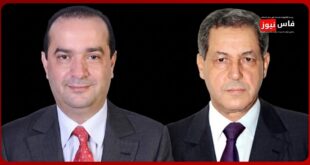
Rachid Hammouni, a Member of Parliament and head of the Progress and Socialism Party (PPS) parliamentary group in the House of Representatives, revealed information he said reflects the start of implementing several development projects in Boulemane Province. These include launching procurement contracts to rebuild a network of roads and tracks, notably the road linking the commune of Almis to the city of Missour up to Amouzar Mermoucha, in addition to rehabilitating internal rural routes across several local communes.
On the health front, Hammouni considered the start of works on the local hospital (Hôpital de proximité) in Boulemane center as the most prominent project awaited by residents since 2017. He noted that bringing the project into implementation resulted from the interaction of several stakeholders, including local communes and provincial authorities, alongside contributions from civil society aimed at accelerating the launch of works.
According to the same source, the hospital is expected to help bring healthcare services closer to residents and improve their quality, with a parallel impact on urban expansion given the project’s location at the entrance of Boulemane in the Tint area, about one kilometer from the commune’s center in the direction of Missour.
Hammouni also mentioned private projects expected to accompany the hospital’s operation, such as housing subdivisions and cafés, which could stimulate economic activity in Boulemane center.
However, while these indicators may appear promising at the level of announcements, they also revive public debate about execution pace and governance. Observers are raising questions about why a key healthcare project has remained pending since 2017 until construction started in July 2025, and whether the delay relates to funding procedures, technical choices, or monitoring setbacks. A parallel question concerns readiness not only as a “building” but as an operational system—equipment, human resources, and defining the medical services that will actually be provided—so that the project does not end up as a structure with no tangible impact on residents’ lives.
On the water file, Hammouni said that 2025 marked a starting point for projects to supply several communes with drinking water, including Missour, Outat El Haj, and El Ksabi, sourced from the Hassan II Dam in Midelt. He also referred to projects to desalinate well water for communes such as Tandit, Sidi Boutayeb, and Er-Rmila, as well as planned projects that may see the light of day in 2026, including solar energy projects in Injil and Er-Rmila, and wind energy projects with contributions from private investors.
While water and energy projects are considered pivotal in an area facing natural and territorial challenges, they too raise public questions about sustainability, cost, and territorial fairness: Who will ensure continuity of supply? What are the operating and maintenance costs? And how will priorities be set between town centers and rural hamlets? Observers argue these issues require regular institutional communication and the publication of precise data on progress and performance indicators, rather than leaving residents dependent on intermittent promises.
It is worth noting that construction works on the Boulemane local hospital began in early July 2025, with a budget of approximately 170 million dirhams.
Source: Fes News Media