Fes News Media Morocco & Fez-Meknes Independent English News Portal — 24/7 Coverage

- African football has undergone a long journey from marginalization to shining on the global stage
- The continent’s most popular sport has evolved from a local activity with limited resources into a powerful force both continentally and internationally, produc...
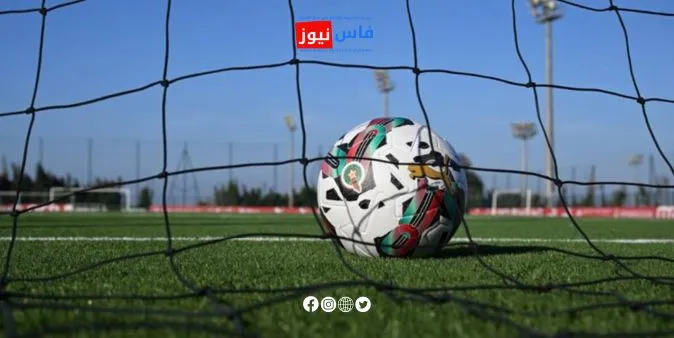
African football has undergone a long journey from marginalization to shining on the global stage. The continent’s most popular sport has evolved from a local activity with limited resources into a powerful force both continentally and internationally, producing talents who excel in top leagues and compete strongly in major tournaments.
Football was introduced to Africa in the late 19th and early 20th centuries by European colonizers, particularly in countries such as Egypt, South Africa, and Algeria. Egypt hosted the first local championship in 1921 and was among the first nations to join FIFA in 1923.
Despite the early participation of African national teams in international competitions—such as Egypt’s appearance in the 1934 FIFA World Cup—the continent’s representation remained modest for decades. This was largely due to geopolitical restrictions and marginalization by international bodies. African football associations, most notably the Confederation of African Football (CAF), established in 1957, fought for recognition and an expanded presence in major tournaments.
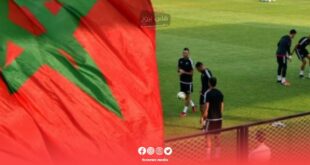
The 1970s and 1980s marked a turning point for African football. Teams like Zaire (now the Democratic Republic of the Congo), which qualified for the 1974 World Cup, along with Cameroon, Nigeria, and Morocco, began achieving noteworthy results on the world stage. Morocco made history in 1986 by becoming the first Arab and African team to reach the Round of 16 in a World Cup, held in Mexico.
The dawn of the new millennium brought a decisive shift, with African stars rising in major European leagues. Players like Didier Drogba (Ivory Coast), Samuel Eto’o (Cameroon), Yaya Touré (Ivory Coast), and Mohamed Salah (Egypt) became global icons, turning Africa into a hub of football talent.
This trajectory culminated in the historic achievement of the Moroccan national team reaching the semi-finals of the 2022 FIFA World Cup in Qatar—the first African and Arab team to do so. FIFA described this moment as a “turning point” in African football history, affirming that the continent now possesses the capability to compete at the highest levels.
At the club level, teams such as Egypt’s Al Ahly, Morocco’s Raja and Wydad Casablanca, and Tunisia’s Espérance have asserted their presence both continentally and internationally. This success reflects improved infrastructure and advanced training methods in several African countries.
Despite ongoing challenges related to infrastructure, limited funding, and a lack of long-term planning in some nations, African football is steadily advancing toward global prominence. Supported by CAF and FIFA, various development programs targeting youth categories, refereeing, and coaching are paving the way.
Observers agree that Africa—with its rich human potential and unparalleled passion for the game—has all the ingredients to become a global football powerhouse in the coming decades.
Source: Fes News Media