Fes News Media Morocco & Fez-Meknes Independent English News Portal — 24/7 Coverage

- FEZ / RABAT (FesNews Media) — Minister Delegate to the Head of Government in charge of Relations with Parliament and Civil Society Qoloub Feitah announced on Mo...
- Presenting the second axis of her ministry’s 2026 harvest and 2027 draft sub-budget in the presence of National Human Rights Council (CNDH) Secretary-General Mo...
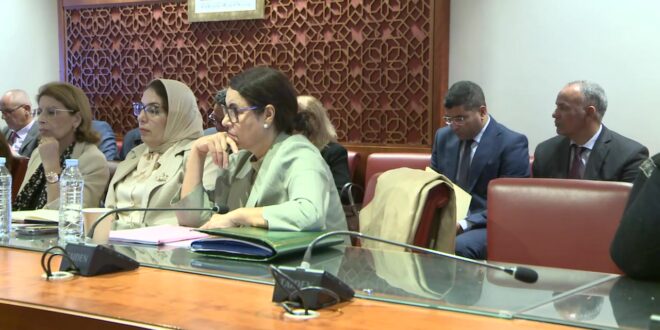
FEZ / RABAT (FesNews Media) — Minister Delegate to the Head of Government in charge of Relations with Parliament and Civil Society Qoloub Feitah announced on Monday evening, November 9, 2026, before the House of Representatives’ Justice, Legislation, Human Rights and Freedoms Committee chaired by MP Mohamed Ghiyat, the completion of the regional civil society capacity-building program across the Fez-Meknes region alongside the preparation of Morocco’s new 2027–2031 National Civil Society Strategy.
Presenting the second axis of her ministry’s 2026 harvest and 2027 draft sub-budget in the presence of National Human Rights Council (CNDH) Secretary-General Mounir Bensalah and Finance Director Mourad Abbad, Minister Delegate Feitah underscored how the 2022–2026 “Nassij” Strategy strengthened institutional governance and project management capacities for local associations across the prefectures of Fez and Meknes and the region’s seven provinces.
Strengthening Fez-Meknes Associations and Participatory Democracy Frameworks
Minister Delegate Qoloub Feitah highlighted that the regional capacity-building milestone completed in Fez-Meknes focused on modernizing administrative and financial management for local associations, laying the groundwork for wider territorial expansion across the Kingdom. In parallel, the Ministry advanced the draft bill on Public Consultation and continued implementing the decree governing partnerships between the State and civil society organizations.
She also pointed to the national study on Associative Employment conducted in partnership with the National Human Development Observatory (ONDH), alongside continuous support for constitutional participatory democracy instruments—including legislative motions and public petitions—and the annual Civil Society Award recognizing high-impact initiatives in Morocco and among Moroccans residing abroad.
2027–2031 Strategy, AI Integration, and Social Innovation Incubators
Building on the evaluation of the 2022–2026 cycle, the Ministry will launch nationwide and regional consultations to draft the 2027–2031 Civil Society Strategy. Key 2027 flagship projects include an operational guide on alternative financial sustainability and private-sector partnerships, an impact-measurement methodology for public subsidies granted to associations, and specialized training to help NGOs adopt digital tools and Artificial Intelligence (AI).
Furthermore, the 2027 action plan provides for the creation of Social Innovation Incubators and Community Innovation Laboratories in partnership with Moroccan universities, as well as the establishment of a National Observatory for Citizen Participation to monitor participatory governance indicators nationwide.
105.34 Million MAD Programmed for 2027 and 78.21 Million MAD Executed in 2026
Presenting the financial appropriations of the 2027 draft sub-budget, Minister Delegate Qoloub Feitah announced a total envelope of 105.34 million dirhams (105,341,000 MAD), comprising 50.15 million MAD for personnel expenses, 40.36 million MAD for operating equipment and various expenses (including 13.14 million MAD dedicated to strengthening civil society capacities, 25.77 million MAD for mission support, 888,000 MAD for participatory democracy, and 492,000 MAD for parliamentary relations), and 14.83 million MAD for capital investment.
On institutional governance, she reported that her department comprises 209 civil servants—over 73 percent of whom are executives—with women representing 48 percent of total staff and 41.18 percent of management positions. The 2027 draft budget schedules recruitment for 20 budgetary posts, while committed appropriations for 2026 reached 78.21 million MAD as of October 2026, following the presentation of the legislative harvest of 72 adopted laws and responses to over 10,334 written questions.