Fes News Media Morocco & Fez-Meknes Independent English News Portal — 24/7 Coverage

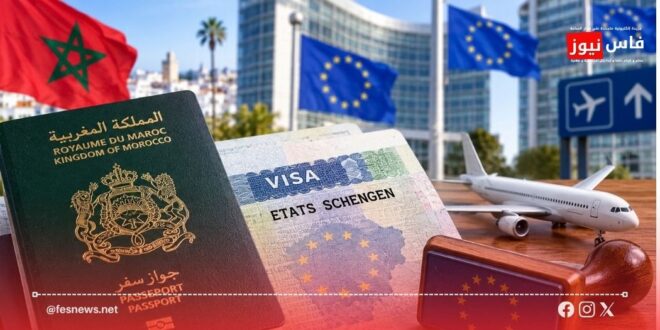
- FEZ / BRUSSELS (FesNews Media) — The European Commission has initiated a comprehensive legislative overhaul of the EU Schengen Visa Code in late 2026, examining...
- According to preparatory consultation documents ahead of the European Commission’s formal legislative proposal scheduled for the first quarter of 2027, Brussels...
FEZ / BRUSSELS (FesNews Media) — The European Commission has initiated a comprehensive legislative overhaul of the EU Schengen Visa Code in late 2026, examining the introduction of an additional harmonized European financial contribution on top of the standard €90 adult short-stay visa fee, even as visa processing providers TLScontact (for France) and BLS International (for Spain) enforce new appointment allocation and walk-in rules across Morocco, one of the world’s top five Schengen visa applicant nations with more than 620,000 applications filed annually.
According to preparatory consultation documents ahead of the European Commission’s formal legislative proposal scheduled for the first quarter of 2027, Brussels is evaluating a dedicated EU-level visa levy designed to co-finance European border management infrastructure and next-generation digital visa platforms. While the exact amount of the supplementary contribution remains under discussion among EU member states, any upward adjustment directly affects Moroccan applicants in the Fez–Meknes region and nationwide, who already pay non-refundable consular and service fees averaging 1,300 to 1,400 MAD per application.
Counterbalancing the proposed financial contribution, the upcoming 2027 Schengen Visa Code revision introduces substantial incentives for trusted regular travelers and accredited corporate professionals. The European Commission aims to standardize and expand the issuance of long-term multiple-entry circulation visas (valid from 1 to 5 years) for Moroccan applicants with a clean compliance record, while establishing fast-track consular channels for employees of certified Moroccan and international companies traveling for business, trade fairs, or technical training.
New TLScontact and BLS Appointment Tiers and Walk-In Exemptions in Morocco
On the ground in Morocco, operational changes implemented in October and November 2026 have reshaped how applicants secure appointments with TLScontact for French visas. To neutralize black-market brokers and automated booking bots, TLScontact has focused its automated waiting-list allocation system (attribution automatique) specifically on Tourism / Private Visits and Family Visits—covering both first-time applicants and renewals of short-stay Type C visas issued since 2021 within the past 59 months.
Under this updated workflow linking France-Visas and TLScontact, applicants in the tourism and family categories receive an automatically assigned appointment slot by email based on consular capacity. If the automatically assigned date is inconvenient, applicants are permitted a single reschedule by opting into the paid Prime Time service, whereas business, academic, medical, and official applicants book directly from open calendar slots.
Simultaneously, Spanish consulates and BLS International have reinforced multi-layer anti-fraud verification (including real-time OTP authentication and strict identity matching at the counter) while maintaining morning walk-in submission windows without prior appointment at designated consular hubs for eligible categories—most notably Moroccan travelers holding qualifying prior Schengen visas issued within the last four years, EU family members, and specific student profiles presenting their original previous passports.
Biometric EES Border Controls and the Transition to the EU VAP Digital Visa
These consular adjustments coincide with the full operational rollout of the European Union’s Entry/Exit System (EES) across external Schengen borders. Replacing traditional ink passport stamps, the EES electronically records the facial image and four fingerprints of non-EU travelers upon arrival and departure, automatically calculating compliance with the strict 90-day stay limit within any 180-day period for passengers departing from Fez–Saïss Airport and other Moroccan hubs.
In parallel, the EU agency eu-LISA is advancing the phased deployment of the European Visa Application Platform (EU VAP), which will progressively replace physical passport sticker visas with cryptographically signed QR-code digital visas. Once fully integrated, Moroccan applicants will only need to appear in person once every 59 months for biometric capture, streamlining mobility alongside legal labor pathways such as European Truck and Bus Driver Contracts for Moroccans and 5-Year Multi-Entry Schengen Visa Eligibility Rules.
Essential Documentation to Prevent Visa Refusals Under Articles 2 and 10
Consular specialists advise Moroccan applicants to prepare a verifiable financial and professional file to avoid refusals linked to insufficient proof of purpose of stay or return guarantees. Applicants should provide three to six months of consistent bank statements free of sudden unexplained cash deposits, verified CNSS salary declarations or tax and commercial registry certificates (Registre de Commerce), confirmed accommodation, and travel medical insurance covering at least €30,000, while strictly avoiding unauthorized intermediaries whose manipulated bookings face immediate cancellation at center entrances.