Fes News Media Morocco & Fez-Meknes Independent English News Portal — 24/7 Coverage

- President Donald Trump and Iranian President Masoud Pezeshkian signed, on Wednesday evening, June 18, 2026, a protocol agreement aimed at ending the war that br...
- The signing took place remotely after it had originally been scheduled in Geneva, Switzerland
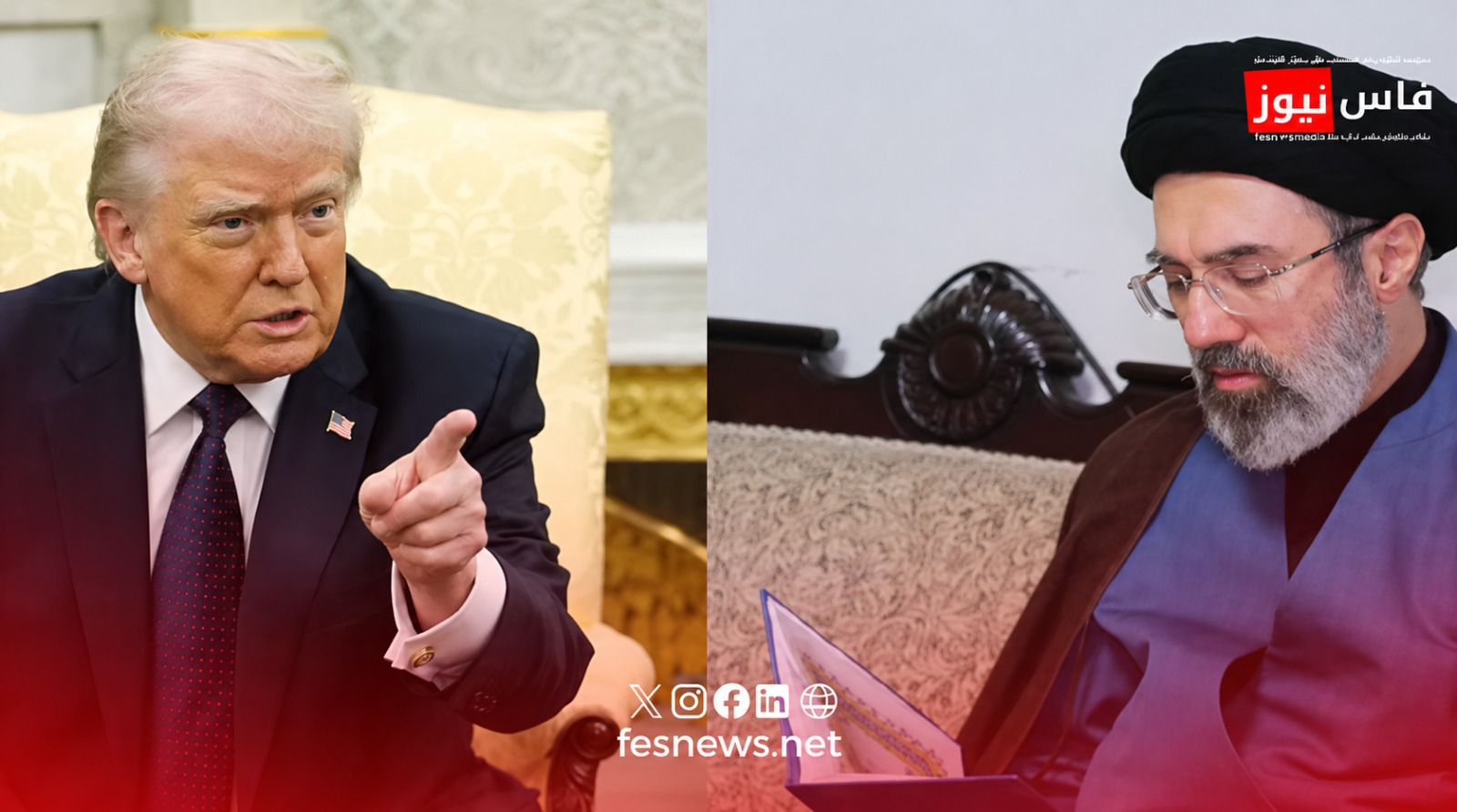
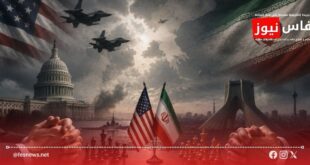
Washington/Tehran – U.S. President Donald Trump and Iranian President Masoud Pezeshkian signed, on Wednesday evening, June 18, 2026, a protocol agreement aimed at ending the war that broke out between the United States and Iran on February 28, following international mediation led by Pakistan and intensive negotiations between both sides.
The signing took place remotely after it had originally been scheduled in Geneva, Switzerland. Trump signed the agreement during his visit to France, while the Iranian president signed it from Tehran. The protocol provides for an immediate cessation of hostilities between the two sides, and includes the Lebanese front within the terms of the agreement.
The deal includes the immediate reopening of the Strait of Hormuz to international navigation and the lifting of the U.S. blockade on Iranian ports, which is expected to restore the flow of global trade and energy supplies through one of the world’s most strategic maritime chokepoints.
It also allows Iran to resume its oil exports immediately upon implementation, in exchange for Tehran’s commitment to enter 60 days of negotiations on its nuclear program.
During this period, both sides will discuss a mechanism to address Iran’s stockpile of enriched uranium through dilution operations under the supervision of the International Atomic Energy Agency, in preparation for a final agreement on the nuclear issue.
On the economic side, the United States, in cooperation with regional partners, committed to supporting a reconstruction and economic development plan for Iran worth at least $300 billion if final negotiations succeed and Tehran complies with the agreement’s provisions, while emphasizing that this funding will not include direct U.S. financial contributions.
The protocol also stipulates the suspension of U.S. sanctions related to Iran’s oil sector immediately upon implementation, with remaining economic sanctions to be fully lifted if a final agreement is reached within the designated negotiation period.
President Donald Trump announced the signing while leaving the Palace of Versailles in France, while French President Emmanuel Macron stated that the agreement opens the door to “lasting peace” and allows the reopening of the Strait of Hormuz. Iran’s Foreign Ministry confirmed that the agreement was officially signed by President Masoud Pezeshkian.
In the first reactions, Iranian Parliament Speaker Mohammad Bagher Ghalibaf described the agreement as a “U.S. failure before Iran,” while Hezbollah Secretary-General Naim Qassem called it a “major victory for Iran,” urging that its outcomes be leveraged in Lebanon.
Economically, global oil prices declined following the announcement, with West Texas Intermediate (WTI) falling 2.81% to $74.63 per barrel, and Brent crude dropping 2.40% to $77.64 per barrel, amid expectations of renewed stability in global energy markets.
G7 countries welcomed the agreement, describing it as a historic opportunity to prevent nuclear proliferation and reduce regional tensions in the Middle East.
A formal ceremony is expected to be held in Switzerland in the coming days to launch the technical phase of negotiations and monitor the implementation of the agreement, with the reopening of the Strait of Hormuz set to be the first practical step resulting from this understanding between Washington and Tehran.
Accord américano-iranien signé à distance après le changement du lieu de signature… Réouverture du détroit d’Ormuz et négociations nucléaires de 60 jours
Washington/Téhéran – Le président américain Donald Trump et le président iranien Massoud Pezeshkian ont signé, mercredi soir 18 juin 2026, un protocole d’accord visant à mettre fin à la guerre déclenchée entre les États-Unis et l’Iran le 28 février dernier, à la suite d’une médiation internationale menée par le Pakistan et de négociations intensives entre les deux parties.
La signature a été effectuée à distance après que la cérémonie ait initialement été prévue à Genève, en Suisse. Donald Trump a signé l’accord lors de sa visite en France, tandis que le président iranien a signé depuis Téhéran. Le protocole prévoit un cessez-le-feu immédiat entre les deux parties, incluant le front libanais dans les dispositions de l’accord.
L’accord prévoit la réouverture immédiate du détroit d’Ormuz à la navigation internationale et la levée du blocus américain sur les ports iraniens, ce qui devrait restaurer la fluidité du commerce mondial et des approvisionnements énergétiques via l’un des passages maritimes les plus stratégiques du monde.
Il autorise également l’Iran à reprendre immédiatement ses exportations de pétrole, en contrepartie de son engagement à entamer des négociations de 60 jours sur son programme nucléaire.
Durant cette période, les deux parties discuteront d’un mécanisme de traitement du stock d’uranium enrichi de l’Iran par des opérations de dilution sous la supervision de l’Agence internationale de l’énergie atomique (AIEA), en vue d’un accord final sur le dossier nucléaire.
Sur le plan économique, les États-Unis, en coopération avec leurs partenaires régionaux, se sont engagés à soutenir un plan de reconstruction et de développement économique de l’Iran d’au moins 300 milliards de dollars en cas de succès des négociations finales et de respect des engagements par Téhéran, tout en précisant que ce financement n’inclura pas de contribution financière directe américaine.
Le protocole prévoit également la suspension immédiate des sanctions américaines liées au secteur pétrolier iranien dès l’entrée en vigueur de l’accord, les autres sanctions devant être levées entièrement en cas d’accord final dans le délai prévu.
Donald Trump a annoncé la signature depuis son départ du palais de Versailles en France, tandis que le président français Emmanuel Macron a déclaré que cet accord ouvre la voie à une “paix durable” et permet la réouverture du détroit d’Ormuz. De son côté, le ministère iranien des Affaires étrangères a confirmé la signature officielle par le président Massoud Pezeshkian.
Dans les premières réactions, le président du Parlement iranien Mohammad Bagher Ghalibaf a qualifié l’accord d’“échec des États-Unis face à l’Iran”, tandis que le secrétaire général du Hezbollah, Naim Kassem, l’a décrit comme une “grande victoire pour l’Iran”, appelant à en exploiter les résultats au Liban.
Sur le plan économique, les prix mondiaux du pétrole ont reculé après l’annonce, avec une baisse de 2,81 % du WTI à 74,63 dollars le baril et de 2,40 % du Brent à 77,64 dollars, dans un contexte d’anticipation d’un retour à la stabilité des marchés de l’énergie.
Les pays du G7 ont salué l’accord, le qualifiant d’opportunité historique pour empêcher la prolifération nucléaire et réduire les tensions au Moyen-Orient.
Une cérémonie officielle est attendue en Suisse dans les prochains jours pour lancer la phase technique des négociations et suivre la mise en œuvre de l’accord, la réouverture du détroit d’Ormuz constituant la première étape concrète de ce rapprochement entre Washington et Téhéran.
Source: Fès News Media