Fes News Media Morocco & Fez-Meknes Independent English News Portal — 24/7 Coverage

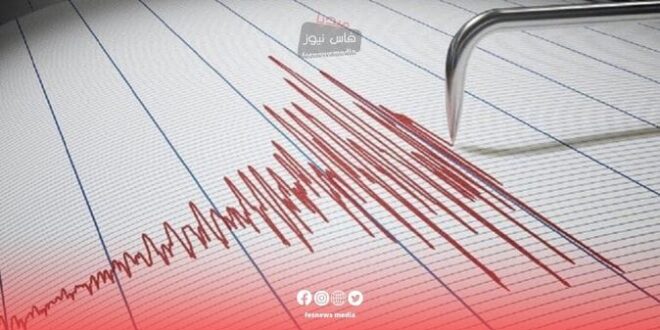
- Nasser Jabour, Director of the National Institute of Geophysics, reported that a light seismic tremor was recorded in the early hours of the morning in the Moul...
- ────────────────────────────Dans une déclaration médiatique, le responsable scientifique a précisé que l’épicentre de la secousse a été localisé dans la provinc...
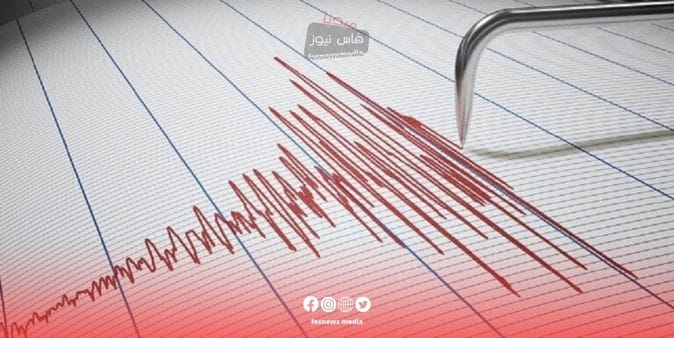
Nasser Jabour, Director of the National Institute of Geophysics, reported that a light seismic tremor was recorded in the early hours of the morning in the Moulay Yacoub area, with a magnitude of 3.6 on the Richter scale.
────────────────────────────
Dans une déclaration médiatique, le responsable scientifique a précisé que l’épicentre de la secousse a été localisé dans la province de Moulay Yacoub, estimant que the tremor was likely weakly felt or not felt at all by residents of several neighboring areas, including Taounate.
In a media statement, the scientific official explained that the epicenter of the tremor was located in Moulay Yacoub Province, noting that it was likely weakly felt or not felt at all by residents of several nearby areas, including Taounate.
────────────────────────────
Selon les données techniques fournies par l’institut, la secousse a été enregistrée à une profondeur d’environ 39 kilomètres, un facteur qui explains the limited perception of the tremor by citizens, given the vertical distance between the earthquake’s focus and the Earth’s surface.
According to technical data provided by the institute, the tremor occurred at a depth of about 39 kilometers, a factor that explains the limited perception by citizens due to the vertical distance between the quake’s focus and the Earth’s surface.
────────────────────────────
S’agissant de l’horaire, la même source a indiqué que la secousse s’est produite à 3 h 55 du matin, précisant qu’aucune secousse répliquée n’a été enregistrée jusqu’au moment de la déclaration.
Regarding timing, the same source confirmed that the tremor occurred at 3:55 a.m., adding that no aftershocks had been recorded up to the time of the statement.
────────────────────────────
Dans un cadre explicatif, le directeur de l’Institut national de géophysique a insisté sur la nécessité de scientific accuracy regarding claims that a large number of “aftershocks” occur daily, explaining that this term is used exclusively to describe tremors that follow a major earthquake in the same geographic area. Isolated and unrelated tremors are classified as ordinary seismic activity.
In an explanatory context, the Director of the National Institute of Geophysics stressed the need for scientific accuracy regarding claims of numerous daily “aftershocks,” explaining that the term applies exclusively to tremors following a major earthquake in the same geographic area, while isolated and unrelated tremors are classified as ordinary seismic activity.
────────────────────────────
Le responsable a ajouté que le Maroc enregistre en moyenne environ 15 légères secousses sismiques par jour, détectées et measured by precise scientific instruments, while weaker tremors remain undetectable due to their low intensity.
He added that Morocco records, on average, about 15 light seismic tremors per day, detected and measured by precise scientific instruments, while weaker tremors remain undetectable due to their low intensity.
────────────────────────────
Nasser Jabour a conclu en soulignant que ces phénomènes relèvent de l’activité sismique naturelle, précisant que le Maroc, like many regions around the world, experiences continuous geological dynamics resulting from movements of the Earth’s crust, a natural process in the planet’s dynamics.
Nasser Jabour concluded by emphasizing that these phenomena fall within natural seismic activity, noting that Morocco, like many regions worldwide, experiences continuous geological dynamics resulting from movements of the Earth’s crust—a natural process in the dynamics of the planet.
────────────────────────────
Source : Fès News Media