فاس نيوز ميديا جريدة الكترونية جهوية تعنى بشؤون و أخبار جهة فاس مكناس – متجددة على مدار الساعة

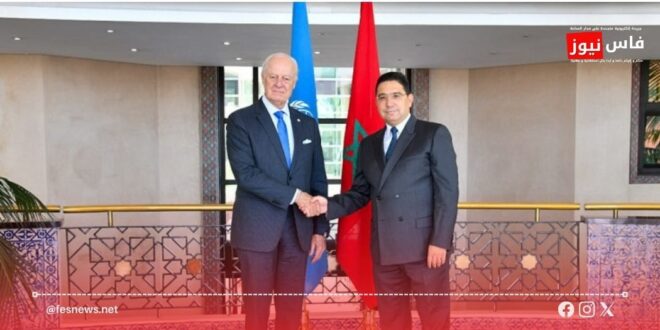
New York – Indicators of a shift in the United Nations’ handling of the Moroccan Sahara issue continue to emerge, after the report of UN Secretary-General António Guterres submitted to the Security Council, along with interventions before the Fourth Committee of the General Assembly, further strengthened the position of Morocco’s autonomy plan within the framework guiding political discussions on the dispute.
This comes following Security Council Resolution 2797, which renewed the mandate of the United Nations Mission for the Referendum in Western Sahara (MINURSO) until October 31, 2026, and called for negotiations to continue on the basis of the autonomy plan presented by Morocco, with the aim of reaching a final political solution acceptable to all parties. The resolution also indicated that genuine autonomy could represent one of the most feasible outcomes.
Guterres’ report, issued this October under document number S/2026/781, is the latest periodic report by the Secretary-General on the situation in Western Sahara. It was submitted to the Security Council on October 1, 2026.
In this context, the report highlights the resumption of political efforts led by the Secretary-General’s Personal Envoy, Staffan de Mistura, as part of efforts aimed at encouraging the parties to resume dialogue and reach a political settlement.
Security Council Resolution 2797 holds particular importance in defining the current framework for negotiations. It reaffirms support for the efforts of the Secretary-General and his Personal Envoy to facilitate and conduct negotiations on the basis of Morocco’s autonomy plan, while emphasizing that the settlement must be just, lasting and acceptable to the parties.
The resolution also called on the parties to engage in discussions without preconditions and on the basis of the Moroccan proposal, while maintaining the stated objective of reaching a final and mutually acceptable political solution that guarantees the right to self-determination of the people of Western Sahara, in accordance with the wording of the resolution.
This process coincided with new positions expressed by several speakers before the Fourth Committee of the United Nations General Assembly, who praised what they described as growing international support for the Moroccan initiative.
During the Fourth Committee meeting in New York, former Peruvian Foreign Minister Miguel Ángel Rodríguez Mackay said that more than two-thirds of UN member states support, according to the data he presented, an autonomy plan under Moroccan sovereignty, considering that Resolution 2797 had strengthened the position of the Moroccan initiative in the political process.
For her part, Portuguese human rights advocate Ana Roios said that the latest UN resolution had strengthened the Security Council’s support for the Moroccan initiative, noting that negotiations should continue on the basis of the Moroccan proposal in order to reach a final political solution acceptable to the parties.
Senegalese geopolitologist Abdou Latif Aidara also spoke about shifts in the positions of a number of countries regarding the Sahara issue, linking them to what he described as growing international support for the Moroccan proposal.
These positions, together with the provisions of Resolution 2797, reflect a shift in the UN debate toward how to move the political process forward on the basis of the proposals on the table and reach an agreed settlement, rather than simply managing the status quo.
Despite the growing positions in support of the Moroccan proposal, the UN process remains based on negotiations between the parties to reach a final and mutually acceptable political solution, as also emphasized by the Security Council resolution itself. The mandate of MINURSO also remains in effect until October 31, 2026, pending developments related to the political process and the expected strategic review of the mission’s future.
Accordingly, the latest development places the autonomy plan in a central position within the UN-sponsored political process, as the Secretary-General’s Personal Envoy continues his efforts and moves aimed at relaunching negotiations between the parties concerned.
Sahara marocain.. Un tournant notable à l’ONU et le plan d’autonomie au cœur de la nouvelle phase des négociations
New York – Les indicateurs d’un changement dans le processus de la question du Sahara marocain se poursuivent au sein des Nations unies, après que le rapport du Secrétaire général de l’ONU, António Guterres, présenté au Conseil de sécurité, ainsi que les interventions devant la Quatrième Commission de l’Assemblée générale, ont renforcé la place du plan d’autonomie marocain dans le cadre sur lequel se déroulent les discussions politiques concernant le conflit.
Cette évolution intervient à la suite de la résolution 2797 du Conseil de sécurité, qui a renouvelé le mandat de la Mission des Nations unies pour l’organisation d’un référendum au Sahara occidental (MINURSO) jusqu’au 31 octobre 2026, et appelé à poursuivre les négociations sur la base du plan d’autonomie présenté par le Maroc, afin de parvenir à une solution politique définitive et acceptable par toutes les parties. La résolution a également indiqué qu’une véritable autonomie pourrait constituer l’un des résultats les plus réalisables.
Le rapport de Guterres, publié en octobre courant sous la référence S/2026/781, constitue le dernier document périodique du Secrétaire général sur la situation au Sahara occidental. Il a été transmis au Conseil de sécurité le 1er octobre 2026.
Dans ce contexte, le rapport met en avant la reprise des efforts politiques menés par l’Envoyé personnel du Secrétaire général, Staffan de Mistura, dans le cadre des démarches visant à pousser les parties à reprendre le dialogue et à parvenir à un règlement politique.
La résolution 2797 du Conseil de sécurité revêt une importance particulière dans la définition du cadre actuel des négociations. Elle réaffirme son soutien aux efforts du Secrétaire général et de son Envoyé personnel visant à faciliter et mener les négociations sur la base du plan d’autonomie marocain, tout en soulignant la nécessité que le règlement soit juste, durable et acceptable par les parties.
La résolution a également appelé les parties à s’engager dans les discussions sans conditions préalables et sur la base de la proposition marocaine, tout en maintenant pour objectif déclaré de parvenir à une solution politique définitive et mutuellement acceptable garantissant le droit à l’autodétermination du peuple du Sahara occidental, conformément à la formulation de la résolution.
Cette évolution a coïncidé avec de nouvelles positions exprimées par plusieurs intervenants devant la Quatrième Commission de l’Assemblée générale des Nations unies, qui ont salué ce qu’ils ont décrit comme une montée du soutien international à l’initiative marocaine.
Lors de la réunion de la Quatrième Commission à New York, l’ancien ministre péruvien des Affaires étrangères, Miguel Ángel Rodríguez Mackay, a déclaré que plus des deux tiers des États membres des Nations unies soutiennent, selon les données qu’il a présentées, le plan d’autonomie sous souveraineté marocaine, estimant que la résolution 2797 avait renforcé la position de l’initiative marocaine dans le processus politique.
De son côté, la défenseure portugaise des droits humains Ana Roios a considéré que la dernière résolution de l’ONU avait renforcé le soutien du Conseil de sécurité à l’initiative marocaine, soulignant que les négociations devraient se poursuivre sur la base de la proposition marocaine afin de parvenir à une solution politique définitive et acceptable par les parties.
Le géopolitologue sénégalais Abdou Latif Aidara a également évoqué des changements dans les positions de plusieurs pays concernant la question du Sahara, les reliant à ce qu’il a qualifié de montée du soutien international à la proposition marocaine.
Ces positions, ainsi que les éléments contenus dans la résolution 2797, reflètent un déplacement du débat onusien vers la manière de faire avancer davantage le processus politique sur la base des propositions soumises et de parvenir à un règlement consensuel, plutôt que de se limiter à la gestion du statu quo.
Malgré la montée des positions favorables à la proposition marocaine, le processus onusien reste fondé sur les négociations entre les parties afin de parvenir à une solution politique définitive et mutuellement acceptable, ce qu’a également souligné la résolution du Conseil de sécurité. Le mandat de la MINURSO se poursuit par ailleurs jusqu’au 31 octobre 2026, dans l’attente des évolutions liées au processus politique et de l’examen stratégique attendu concernant l’avenir de la mission.
Ainsi, la dernière évolution place le plan d’autonomie au cœur du processus politique parrainé par les Nations unies, alors que les démarches de l’Envoyé personnel du Secrétaire général et les efforts visant à relancer les négociations entre les parties concernées se poursuivent.
Source : Fès News Media