Fes News Media Morocco & Fez-Meknes Independent English News Portal — 24/7 Coverage

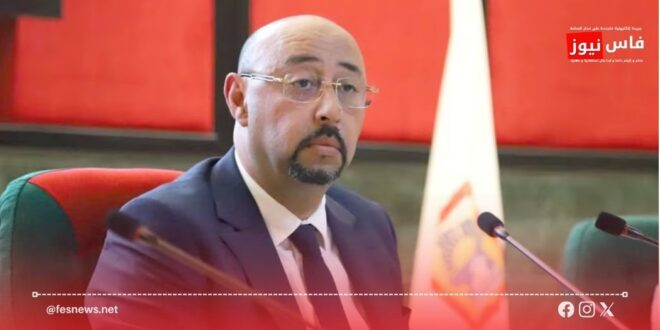
- Tangier – Fès News The case involving electoral ballot papers that erupted in the city of Tangier following the September 23, 2026 elections has entered a new p...
- The case began with the arrest of a person found in possession of a bag containing electoral ballot papers

Tangier – Fès News
The case involving electoral ballot papers that erupted in the city of Tangier following the September 23, 2026 elections has entered a new phase after the public prosecution decided to place Tangier Mayor Mounir Lyamouri in police custody, as part of the judicial investigation opened into events related to ballot papers.
The case began with the arrest of a person found in possession of a bag containing electoral ballot papers. According to a statement by the King’s Prosecutor General, preliminary investigations revealed that the individual was the vice-president of a polling station and that, with the assistance of the station’s president, he had removed a number of ballot papers from inside the polling station and placed them in a bag, before later returning them to the two polling stations in coordination with other individuals.
Different ink.. a detail that increased suspicion
Among the information contained in the public prosecution’s statement was the fact that the type of ink found on the seized ballot papers was different from the ink used inside the polling stations concerned.
These findings prompted the public prosecution to expand the investigation in order to establish all the circumstances surrounding the incident and identify all individuals whose involvement might be revealed by the investigation, regardless of their status or positions.
Based on the results of the preliminary investigation, the public prosecution petitioned the investigating judge to conduct an investigation into the individuals concerned while they were in pretrial detention, on suspicion of committing the criminal offenses of violating electoral procedures, forgery, and participation in such acts.
How did the investigation reach Tangier’s mayor?
On September 28, security services arrested Mounir Lyamouri at Ibn Battouta Airport in Tangier following his return from Spain. He was subsequently questioned by the judicial police before being placed in police custody in connection with the ongoing investigation into the case.
However, the public prosecution’s statement concerning the first phase of the case did not name Lyamouri and did not state that he was the person who removed or falsified the ballot papers. His placement in police custody therefore means that he is being investigated as part of the case and does not, in itself, constitute a finding of guilt.
Media reports about meetings and communications
Alongside the official information, media outlets published reports referring to meetings allegedly held before the vote inside hotel apartments, the deletion of surveillance-camera recordings, and other individuals who were reportedly questioned or arrested. Within the limits of what has been published, these details remain attributed to media sources and should not be treated as established judicial facts unless they are confirmed by the public prosecution or officially disclosed by the investigations.
Reports also indicated that the number of people subject to judicial procedures had increased, while the investigation continues to determine the various potential responsibilities.
Central inspection committee from the Ministry of Interior
The matter has not been limited to the judicial process. Published information indicated that the Ministry of Interior dispatched a central inspection committee to Tangier to investigate irregularities that affected the electoral process at two polling stations in the Tangier-Assilah electoral constituency.
The case therefore appears to be proceeding along two parallel tracks:
A judicial track supervised by the public prosecution and the judicial police, which has reached the judicial investigation stage for some suspects.
An administrative track led by the Ministry of Interior to investigate the circumstances surrounding the irregularities that affected the electoral process.
Questions awaiting answers
As the case moves into a more sensitive phase, it raises a number of questions that the investigations will have to answer, including:
What is the nature of the relationship between the people found in possession of the ballot papers and the other individuals covered by the investigation?
Why did the ballot papers under investigation bear, according to the official statement, a different type of ink?
Will the investigations uncover other electoral acts beyond the original incident?
And what nature of responsibility could be established against each individual separately?
And the most sensitive question:
What caused the investigation to extend to an elected political official serving as mayor of the city of Tangier?
These questions remain open pending decisions by the public prosecution or the results of the judicial investigation.
Tanger.. Nouveaux développements dans l’affaire des bulletins de vote après le placement du maire Mounir Lyamouri en garde à vue
Tanger – Fès News
L’affaire des bulletins électoraux qui a éclaté dans la ville de Tanger à la suite des élections du 23 septembre 2026 est entrée dans une nouvelle phase, après que le parquet a décidé de placer le maire de Tanger, Mounir Lyamouri, en garde à vue, dans le cadre de l’enquête judiciaire ouverte sur des faits liés aux bulletins de vote.
L’affaire a débuté avec l’interpellation d’une personne en possession d’un sac contenant des bulletins électoraux. Selon le communiqué du procureur général du Roi, les premières investigations ont révélé que l’intéressé était vice-président d’un bureau de vote et qu’il avait, avec l’aide du président du bureau, sorti un certain nombre de bulletins de vote du bureau et les avait placés dans un sac, avant de les remettre ultérieurement dans les deux bureaux de vote, en coordination avec d’autres personnes.
L’encre différente.. un détail qui a renforcé les soupçons
Parmi les éléments mentionnés dans le communiqué du parquet figure le fait que le type d’encre présent sur les bulletins de vote saisis était différent de celui utilisé à l’intérieur des bureaux de vote concernés.
Ces éléments ont conduit le parquet à élargir l’enquête afin d’établir toutes les circonstances entourant les faits et d’identifier toutes les personnes dont les investigations pourraient révéler l’implication, quels que soient leurs qualités ou leurs fonctions.
Sur la base des résultats de l’enquête préliminaire, le parquet a saisi le juge d’instruction afin qu’une enquête soit menée à l’encontre des personnes concernées en état de détention provisoire, pour des soupçons de commission de crimes liés à l’atteinte aux opérations électorales, à la falsification et à la participation à ces actes.
Comment l’enquête est-elle arrivée jusqu’au maire de Tanger ?
Le 28 septembre, les services de sécurité ont interpellé Mounir Lyamouri à l’aéroport Ibn Battouta de Tanger à son retour d’Espagne, avant qu’il ne soit entendu par la police judiciaire. Il a ensuite été placé en garde à vue dans le cadre de l’enquête en cours dans cette affaire.
Toutefois, le communiqué du parquet relatif à la première phase de l’affaire n’a pas cité Lyamouri nommément et n’a pas affirmé qu’il était celui qui avait sorti ou falsifié les bulletins de vote. Son placement en garde à vue signifie donc qu’il fait l’objet d’une enquête dans le cadre de cette affaire et ne constitue en soi nullement un jugement de culpabilité.
Des informations médiatiques faisant état de réunions et de communications
Parallèlement aux éléments officiels, des médias ont publié des informations faisant état de réunions qui auraient été tenues avant le scrutin dans des appartements hôteliers, de l’effacement d’enregistrements de caméras de surveillance, ainsi que d’autres personnes qui auraient été entendues ou interpellées. Ces éléments restent, dans la limite de ce qui a été publié, attribués à des sources médiatiques et ne doivent pas être considérés comme des faits judiciaires définitifs tant qu’ils n’ont pas été confirmés par le parquet ou officiellement révélés par les enquêtes.
Des informations ont également fait état d’une augmentation du nombre de personnes concernées par les procédures judiciaires, tandis que les investigations se poursuivent afin de déterminer les différentes responsabilités éventuelles.
Une commission centrale d’inspection relevant du ministère de l’Intérieur
L’affaire ne se limite pas au volet judiciaire. Des informations publiées indiquent que le ministère de l’Intérieur a dépêché une commission centrale d’inspection à Tanger afin d’enquêter sur les irrégularités qui auraient entaché le processus électoral dans deux bureaux de vote de la circonscription électorale Tanger-Assilah.
Il apparaît ainsi que l’affaire évolue selon deux volets parallèles :
Un volet judiciaire supervisé par le parquet et la police judiciaire, qui est arrivé au stade de l’instruction judiciaire pour certains suspects.
Un volet administratif mené par le ministère de l’Intérieur afin d’enquêter sur les circonstances des irrégularités qui ont entaché le processus électoral.
Les questions en attente de réponses
Alors que l’affaire entre dans une phase plus sensible, elle soulève un certain nombre de questions auxquelles les enquêtes devront répondre, notamment :
Quelle est la nature de la relation entre les personnes trouvées en possession des bulletins de vote et les autres personnes concernées par l’enquête ?
Pourquoi les bulletins de vote faisant l’objet de l’enquête portaient-ils, selon le communiqué officiel, un type d’encre différent ?
Les enquêtes révéleront-elles d’autres actes électoraux en dehors des faits initiaux ?
Et quelle est la nature de la responsabilité qui pourrait être établie à l’encontre de chaque personne individuellement ?
Et la question la plus sensible :
Qu’est-ce qui a conduit l’enquête à s’étendre à un responsable politique élu exerçant les fonctions de maire de la ville de Tanger ?
Ces questions restent ouvertes jusqu’à la publication de décisions du parquet ou des résultats de l’enquête judiciaire.
Source : Fès News Media