فاس نيوز ميديا جريدة الكترونية جهوية تعنى بشؤون و أخبار جهة فاس مكناس – متجددة على مدار الساعة


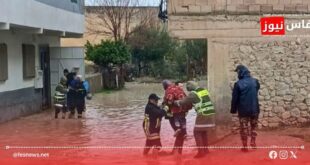
In recent days, the Al-Melha neighborhood in the city of Taza has experienced repeated flooding following rainfall, causing material losses and damage to several homes, along with mobility difficulties for residents, in a scenario that recurs every rainy season.
────────────────────────────
Selon des données locales concordantes, ces inondations sont liées à la montée du niveau de l’Oued Al‑Arbaa qui traverse la zone. Celui-ci n’est plus en mesure d’absorber les volumes d’eau déversés lors de fortes précipitations, ce qui entraîne leur débordement vers les quartiers voisins, notamment Al-Melha.
According to consistent local sources, these floods are linked to the rise in water levels of Oued Al-Arbaa running through the area. The wadi is no longer able to absorb the volumes of water generated during heavy rainfall, causing overflow toward nearby neighborhoods, particularly Al-Melha.
────────────────────────────
Les mêmes informations indiquent que le wadi a, au fil des années, suffered environmental degradation due to the accumulation of silt and waste, in addition to wastewater discharge, which has reduced its capacity and made the area more vulnerable to flooding risks.
The same information indicates that, over the years, the wadi has suffered environmental degradation due to the accumulation of silt and waste, as well as wastewater discharge, which has reduced its capacity and made the area more vulnerable to flood risks.
────────────────────────────
Dans ce contexte, le Conseil communal de Taza avait annoncé en 2020 le lancement d’un projet visant à protéger la ville contre les inondations de l’oued Al-Arbaa. Ce projet comprenait des mesures préventives financées par le Fonds de lutte contre les effets des catastrophes naturelles. Toutefois, la récurrence des inondations au cours des saisons suivantes a ravivé les interrogations quant à l’état d’avancement du projet et à son efficacité sur le terrain.
In this context, the Municipal Council of Taza announced in 2020 the launch of a project aimed at protecting the city from flooding caused by Oued Al-Arbaa. The project included preventive measures funded by the Fund to Combat the Effects of Natural Disasters. However, the recurrence of flooding in subsequent seasons has raised renewed questions about the project’s progress and its effectiveness on the ground.
────────────────────────────
Des calls continue to be made for cleaning and widening the wadi’s channel, improving the sewage network, and preventing encroachments on the wadi’s protected area, as essential measures to reduce risks, according to technical data circulating locally.
There are also ongoing calls to clean and widen the wadi’s channel, improve the sewage network, and prevent encroachments on the wadi’s protected area, as essential measures to reduce risks, according to technical assessments circulating at the local level.
────────────────────────────
Les inondations affectant le quartier Al-Melha à Taza demeurent parmi les problèmes environnementaux et urbanistiques majeurs de la ville, dans l’attente de clarifications officielles sur l’état des projets programmés et les mesures adoptées pour prévenir la répétition des dommages à l’avenir.
The floods affecting the Al-Melha neighborhood in Taza remain among the city’s major environmental and urban challenges, pending official clarifications on the status of planned projects and the measures taken to prevent the recurrence of damage in the future.
────────────────────────────
Source : Fès News Media