فاس نيوز ميديا جريدة الكترونية جهوية تعنى بشؤون و أخبار جهة فاس مكناس – متجددة على مدار الساعة


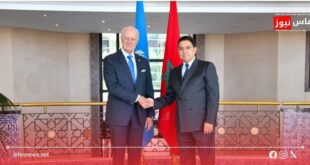
Moscow, October 16, 2025 – Russian Foreign Minister Sergey Lavrov, during his meeting with his Moroccan counterpart, Nasser Bourita, Minister of Foreign Affairs, African Cooperation, and Moroccan Expatriates, confirmed the strength of Russian-Moroccan relations, which are based on a solid legal framework represented by the 2002 Strategic Partnership Declaration and the statement on deepening this partnership. Bourita’s visit to Moscow comes within the framework of strengthening bilateral cooperation amid current international and regional challenges.
Foundations of the Russian-Moroccan Partnership
Relations between the two countries are based on high-level agreements signed by Russian President Vladimir Putin and His Majesty King Mohammed VI. The 2002 Strategic Partnership Declaration, along with the statement on deepening this partnership, forms the legal basis for developing cooperation in the fields of politics, economy, and culture. Lavrov noted that these agreements reflect the commitment of both countries to expand cooperation to include regional and international issues.
Key Points of Bourita’s Visit
The Moroccan minister’s visit to Moscow included in-depth discussions on foreign policy and coordination in international organizations, especially the United Nations. Bourita also co-chaired, along with Russian Deputy Prime Minister Dmitry Patrushev, the eighth session of the Russian-Moroccan Joint Governmental Committee for Economic, Scientific, and Technical Cooperation, which aims to enhance collaboration in economic and technical fields.
Regional Challenges and the Russian Role
Speaking on the complex international situation, Lavrov pointed to the challenges facing the Middle East and North Africa region, affirming Russia’s readiness to contribute to solving these problems in cooperation with other countries. He emphasized the importance of continued coordination with Morocco within the United Nations framework, alongside strengthening relations with the Arab League to support regional stability.
Bilateral Political Consultations
Lavrov underscored the special importance of bilateral political consultations between Russia and Morocco, noting that these talks receive great attention from the Russian side. He expressed confidence that the discussions would contribute to enhancing bilateral relations and achieving fruitful outcomes for both parties.
Summary Table of Key Bilateral Relations Points
| Aspect | Details |
|---|---|
| Legal framework | 2002 Strategic Partnership Declaration, Statement on deepening partnership |
| Economic cooperation | Eighth session of the Joint Governmental Committee for Economic, Scientific, and Technical Cooperation |
| Political cooperation | Discussions on foreign policy and coordination at the United Nations |
| Regional challenges | Focus on the Middle East and North Africa |
| Cooperation with Arab League | Strengthening relations to support regional stability |
Conclusion
Nasser Bourita’s visit to Moscow confirms the strength of Russian-Moroccan relations and the two countries’ commitment to deepening their strategic partnership. Through coordination in international organizations and economic and political cooperation, Russia and Morocco seek to confront regional and international challenges, focusing on enhancing stability in the Middle East and North Africa region.