فاس نيوز ميديا جريدة الكترونية جهوية تعنى بشؤون و أخبار جهة فاس مكناس – متجددة على مدار الساعة


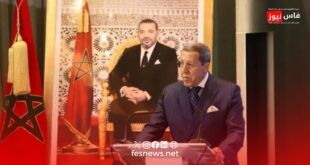
On Friday, October 10, 2025, King Mohammed VI delivered a significant royal speech marking the opening of the final legislative year of the current mandate of the House of Representatives. This speech aligns with the Sovereign’s strategic vision aiming to build an emerging Morocco that is economically strong, socially just, and institutionally exemplary.
At the outset, the King emphasized the importance of the legislative institution as a central arena for national responsibility, delivering a strong message to uphold sound governance free from partisan conflicts, and stressing the need to activate the parliament’s roles in legislation, oversight, and evaluation. He also acknowledged the progress made in parliamentary diplomacy and called for better coordination between parliamentary diplomacy and official state diplomacy, urging greater discipline and competence in political work.
The speech presented a holistic development vision where large-scale projects and social programs are complementary, stating that Morocco’s progress requires the integration of infrastructure, public policies, and social mechanisms to tangibly improve citizens’ lives across all regions. In this context, the King urged overcoming institutional and political shortcomings and called for a results-oriented culture and a profound change in mentalities and working methods, especially to combat bureaucracy, inertia, and inefficiency in public administration. He emphasized that the responsibility for development extends beyond the government to all political and social actors.
King Mohammed VI also highlighted the dynamic renewal in territorial and social development, stressing the need to accelerate Morocco’s progress and launch a new generation of territorial development programs. He gave special focus to establishing fair and effective local governance that reflects true national advancement. Addressing the existing disparities between urban and rural areas, the King called for particular attention to severely vulnerable regions such as mountainous and oasis areas, defining this as a moral and political imperative to correct historical imbalances.
The speech linked Morocco’s success explicitly to social and territorial justice, committing to these as founding pillars of an emerging Morocco that ensures the benefits of growth reach everyone. To achieve this, the King underscored the necessity of modernizing political and administrative structures by integrating a culture based on the collection of accurate field data and the use of digital technologies, prescribing a cultural revolution in governance focused on transparency, continuous evaluation, and decisions grounded in tangible evidence rather than political or clientelist considerations.
Youth concerns were implicitly present in the speech through topics of employment, education, and local development, reflecting the King’s commitment to involve this vital segment in the national transformation and urging institutions to ensure better representation of youth within the political landscape.
The speech contained implicit critiques of government management, denouncing time-consuming and resource-heavy administrative practices that hinder project execution. The King demanded improved coordination between urban and rural areas to ensure effective and ethically sound development.
This 2025 October 10 speech continues the themes of the July 2025 Throne Speech, reiterating the call for new territorial development programs and acceleration of Morocco’s emergence, emphasizing perseverance, planning, and coherence. The King reminded that development challenges transcend government and parliamentary terms, rooting the project in a long-term civilizational endeavor aligned with the royal motto: “God, Homeland, King.”
The speech concluded with a profound spiritual tone, quoting a Quranic verse emphasizing the moral responsibility of political action before God and the nation, reaffirming that building an emerging Morocco demands responsible governance, renewed solidarity, and unwavering faith in the nation’s greatness.