Fes News Media Morocco & Fez-Meknes Independent English News Portal — 24/7 Coverage


- The Schengen visa grants non-European Union citizens short-term travel and stay rights within the Schengen Area for up to 90 days within any 180-day period, mai...
- Currently, the Schengen Area comprises 29 countries—including 25 EU members plus four others—forming the largest borderless travel zone globally
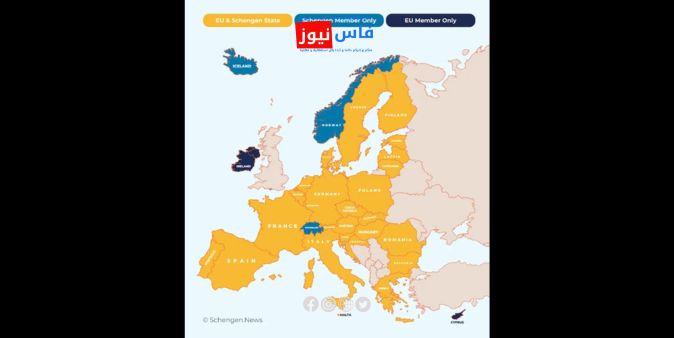
The Schengen visa grants non-European Union citizens short-term travel and stay rights within the Schengen Area for up to 90 days within any 180-day period, mainly for tourism, business, or visiting family. Currently, the Schengen Area comprises 29 countries—including 25 EU members plus four others—forming the largest borderless travel zone globally.
This visa simplifies movement between member countries by eliminating internal border checks, boosting tourism, trade, and cultural exchange. However, it does not permit employment or long-term residency, requiring applicants to provide documentation justifying the visit’s purpose and proof of financial means.
Definition and Types of Schengen Visa
The Schengen visa is an official document issued by Schengen member states to citizens of countries that require it for entry. It allows short stays for tourism, business, family visits, or brief studies, valid up to 90 days every 180 days. Types include single-entry, multiple-entry, and airport transit visas.
Main Purposes and Importance
Primarily used for tourism, business trips, family visits, and short studies, the visa streamlines travel across 29 countries, enabling travelers to visit multiple destinations without separate visas.
Application Process and Fees
Applicants must apply at the consulate of the main destination country, providing a valid passport, photos, health insurance covering at least €30,000, proof of purpose such as reservations or invitation letters, and evidence of sufficient funds. The fee is approximately €90 for adults.
History of the Schengen Area
The Schengen Area began in 1985 with an agreement among five European states to abolish internal border checks. The Schengen Agreement was formally signed in 1990 and incorporated into EU law in 1999. By January 2025, following the full accession of Bulgaria and Romania, the area expanded to 29 countries. It spans over 4 million km² and is home to over 450 million people, symbolizing deep European integration.
Member Countries as of September 2025
| Country | EU Member State | Schengen Entry Year |
|---|---|---|
| Austria | Yes | 1995 |
| Belgium | Yes | 1995 |
| Bulgaria | Yes | 2025 |
| Croatia | Yes | 2023 |
| Czech Republic | Yes | 2007 |
| Denmark | Yes | 2001 |
| Estonia | Yes | 2007 |
| Finland | Yes | 2001 |
| France | Yes | 1995 |
| Germany | Yes | 1995 |
| Greece | Yes | 2000 |
| Hungary | Yes | 2007 |
| Iceland | No | 2001 |
| Italy | Yes | 1997 |
| Latvia | Yes | 2007 |
| Liechtenstein | No | 2011 |
| Lithuania | Yes | 2007 |
| Luxembourg | Yes | 1995 |
| Malta | Yes | 2007 |
| Netherlands | Yes | 1995 |
| Norway | No | 2001 |
| Poland | Yes | 2007 |
| Portugal | Yes | 1995 |
| Romania | Yes | 2025 |
| Slovakia | Yes | 2007 |
| Slovenia | Yes | 2007 |
| Spain | Yes | 1995 |
| Sweden | Yes | 2001 |
| Switzerland | No | 2008 |
These countries apply common visa policies, enabling seamless travel.
Visa Categories and Requirements
Main Schengen visa types include:
- Short-stay visa (Type C): For tourism, business, valid up to 90 days.
- Multiple-entry visa: Permits repeated entries.
- Airport transit visa (Type A): For airport transit only.
- National visa (Type D): For long-term stays; not fully part of Schengen.
Applications require a valid passport, photographs, travel insurance, proof of financial means, and documentation confirming the trip purpose.
Economic and Cultural Significance
The visa facilitates approximately 1.25 billion trips annually within the Schengen Area and supports about 32 million European companies by easing the movement of workers and goods. It also enhances security cooperation via the Schengen Information System (SIS) and the Frontex border agency. From October 2025, the new Entry/Exit System (EES) will improve border management.
Tips for Applicants
Applicants should consult official sources like the European Commission website and apply well in advance, as processing can take up to 45 days. Nationals of countries such as the USA and Canada may be exempt for short stays.