Fes News Media Morocco & Fez-Meknes Independent English News Portal — 24/7 Coverage


- On Wednesday, 71 members of the Israeli Knesset voted in favor of urging the Israeli government to annex the occupied West Bank, with the aim of “removing any p...
- ” The motion was adopted by 71 votes to 13
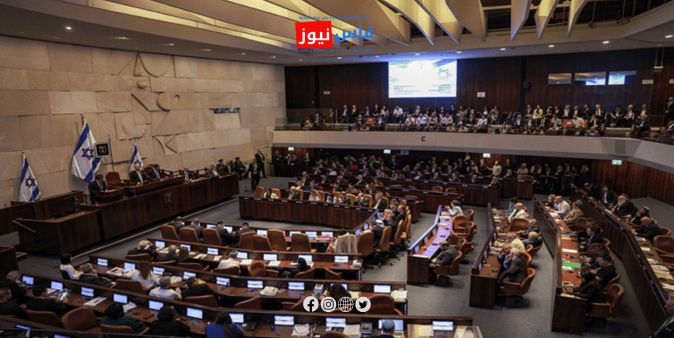
On Wednesday, 71 members of the Israeli Knesset voted in favor of urging the Israeli government to annex the occupied West Bank, with the aim of “removing any plan for a Palestinian state from the agenda.” The motion was adopted by 71 votes to 13. While it does not carry the force of law, it asserts Israel’s “natural, historical, and legal” right over the Palestinian territory.
The vote was supported by members of Prime Minister Benjamin Netanyahu’s right-wing coalition as well as some opposition lawmakers. The legislators affirmed that annexing the territory, which Israel refers to as Judea and Samaria, would strengthen the State of Israel, enhance its security, and prevent any challenge to the fundamental right of the Jewish people to peace and security in their homeland.
The text of the motion stated that Israeli sovereignty over Judea and Samaria is an integral part of realizing Zionism and the national vision of the Jewish people, who have returned to their land.
Strong Palestinian and International Reactions
The Palestinian Authority condemned the vote, with Hussein al-Sheikh, Secretary-General of the Palestine Liberation Organization (PLO), describing it as a “direct assault on the rights of the Palestinian people.” He added that these unilateral Israeli actions constitute a “blatant violation of international law,” signaling the Palestinian leadership’s firm rejection of the move.
Currently, about 500,000 Israelis live in settlements throughout the West Bank alongside some three million Palestinians. The United Nations regularly condemns Israeli settlement activity as illegal under international law and one of the main obstacles—alongside ongoing violence between the two sides—to achieving a lasting peace based on the establishment of a viable Palestinian state with authority over the West Bank and Gaza Strip.
The Palestinian issue remains a core and sensitive matter in regional and international affairs, with tensions and widespread opposition persisting against unilateral measures that undermine peace prospects and perpetuate the stalemate in negotiations.