Fes News Media Morocco & Fez-Meknes Independent English News Portal — 24/7 Coverage

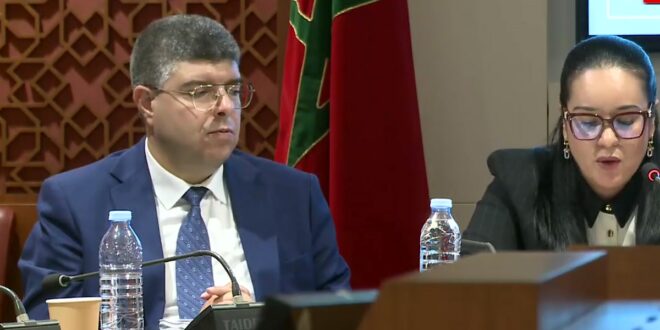
- RABAT (FesNews Media) — Qoloub Feitah, Minister Delegate to the Head of Government in charge of Relations with Parliament and Civil Society, presented her minis...
- Chaired by Committee President MP Mohamed Ghiyat, the session also convened senior officials from the National Human Rights Council (CNDH), including Secretary-...
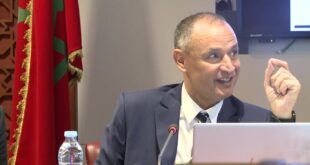
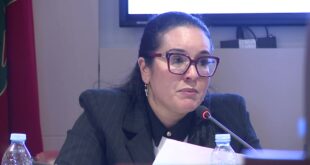
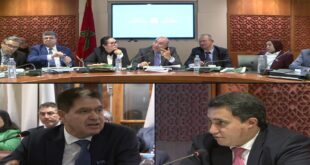
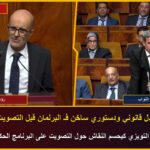
RABAT (FesNews Media) — Qoloub Feitah, Minister Delegate to the Head of Government in charge of Relations with Parliament and Civil Society, presented her ministry’s 2027 draft sub-budget on Monday evening, November 9, 2026, before the Justice, Legislation, Human Rights and Freedoms Committee at the House of Representatives. Chaired by Committee President MP Mohamed Ghiyat, the session also convened senior officials from the National Human Rights Council (CNDH), including Secretary-General Mounir Bensalah and Finance Director Mourad Abbad, ahead of the general parliamentary debate scheduled for Thursday, November 12, 2026.
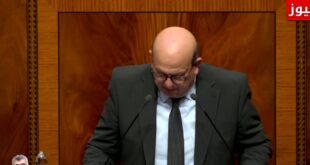
Addressing lawmakers at the opening of the sitting, Minister Delegate Qoloub Feitah underscored that the 2027 draft budget comes at a pivotal institutional juncture marking the launch of Morocco’s 12th Legislative Term (2026–2031) and the implementation of the 2026–2031 Government Program. She highlighted the Royal Guidelines delivered by His Majesty King Mohammed VI during the opening of the autumn parliamentary session, which called for a decisive acceleration in socio-economic development, territorial justice, and institutional accountability.
Legislative Harvest: 72 Laws Adopted, Including 30 Passed Unanimously
Reviewing the legislative performance recorded over the past parliamentary year, Minister Delegate Feitah reported that both chambers of Parliament definitively adopted 72 laws spanning critical national reforms, including fundamental rights and freedoms, judicial modernization, social protection, public finance, state-owned enterprise reform, education, and advanced regionalization. Notably, 30 laws were adopted unanimously and 42 by majority vote, comprising 55 texts approved on first reading and 17 on second reading.
On the legislative initiative front, the government tabled 69 new draft bills alongside 30 bills already under committee review, leaving 27 government bills currently in the legislative pipeline (19 in the House of Representatives and 8 in the House of Councillors). Simultaneously, lawmakers introduced 20 new parliamentary member bills, with the Ministry strengthening inter-institutional mechanisms to examine parliamentary legislative proposals in full accordance with constitutional separation and cooperation of powers.
Parliamentary Oversight: 10,334 Written Questions, 4,734 Oral Questions, and 380 Tracked Government Commitments
Detailing parliamentary oversight indicators, Minister Delegate Feitah revealed that the government expressed readiness to answer 569 topical oral questions—of which 424 were scheduled in plenary sittings—while receiving 4,734 regular oral questions and answering 377 during weekly sittings. In the realm of written parliamentary scrutiny, ministries received 10,334 written questions and processed over 4,900 official written replies within constitutional deadlines.
Furthermore, the Ministry cataloged and monitored 380 formal government commitments made by Cabinet ministers during plenary oral question sessions, processed 106 requests to convene standing parliamentary committees, and coordinated annual public policy evaluation sittings on national literacy programs and climate change adaptation.
2027 Budget Priorities: Digital Coordination, Participatory Democracy, and Civil Society Empowerment
Outlining the strategic priorities of the 2027 draft sub-budget, Minister Delegate Qoloub Feitah emphasized expenditure rationalization, digital transformation of legislative and oversight tracking between ministries and Parliament, and expanded capacity-building programs for Moroccan civil society organizations. Particular focus is placed on operationalizing constitutional instruments of participatory democracy—including legislative motions and public petitions—while Committee Chairman MP Mohamed Ghiyat announced that detailed parliamentary debate on the sub-budgets of both the Ministry and the National Human Rights Council (CNDH) will take place on Thursday, November 12, 2026, at 3:00 PM.