Fes News Media Morocco & Fez-Meknes Independent English News Portal — 24/7 Coverage

- RABAT (FesNews Media) — Morocco’s government unveiled a series of major socio-economic measures before the House of Representatives on Monday, November 9, 2026,...
- Across three consecutive ministerial questioning blocks covering Handicrafts and the Social and Solidarity Economy, Employment and Social Dialogue, and Transpor...
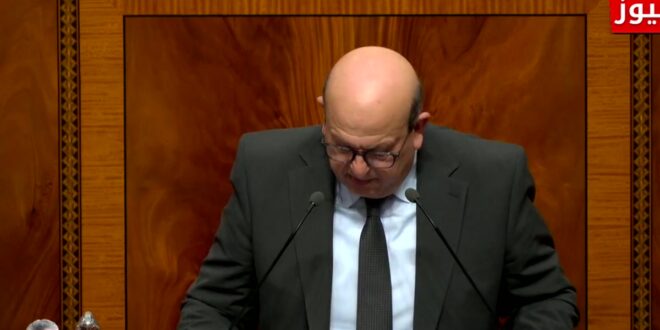
RABAT (FesNews Media) — Morocco’s government unveiled a series of major socio-economic measures before the House of Representatives on Monday, November 9, 2026, during a marathon weekly oral questions session chaired by Third Deputy Speaker MP Abdellah Bouanou. Across three consecutive ministerial questioning blocks covering Handicrafts and the Social and Solidarity Economy, Employment and Social Dialogue, and Transport and Logistics, Cabinet members announced a 60 percent increase in exceptional fuel subsidies for road transport professionals, a doubling of training stipends for master artisans, and a call to convene Morocco’s Third National Employment Assizes.
Opening the session, Abdeljabbar Rachidi, Minister Delegate to the Minister of Tourism, Handicrafts, and Social and Solidarity Economy, presented the government’s human-capital reform across Morocco’s artisanal vocational training network, which now comprises 64 specialized institutes and centers supported by 135 regional branches and annexes. To strengthen in-enterprise apprenticeship programs and encourage veteran craftsmen to pass down rare skills, the Minister announced that the remuneration paid to supervising master artisans (Maâlems) has been raised from 65 dirhams to 135 dirhams per training session.
Supporting 63,000 Cooperatives and Training 4,900 Correctional Inmates Annually
Minister Delegate Rachidi further detailed joint reintegration programs carried out in partnership with the General Delegation for Prison Administration and Reintegration (DGAPR) and the National Agency for the Promotion of Employment and Skills (ANAPEC), which provide certified vocational craft training to 4,900 inmates annually across Moroccan correctional facilities. Lawmakers from both the governing majority and opposition groups also pressed the Ministry to establish permanent exhibition and marketing hubs for traditional crafts inside national airports and major tourist centers.
Addressing the expansion of the Social and Solidarity Economy, the Minister noted that Morocco’s cooperative fabric now exceeds 63,000 cooperatives nationwide, with particular emphasis on rural women’s cooperatives and mountain-region producers. He affirmed that the upcoming Framework Law on the Social and Solidarity Economy will modernize governance, expand access to financing, and accelerate digital marketing partnerships with global e-commerce platforms alongside new raw-material and origin-labeling safeguards for Fez Zellige.
Youth Employment Debate: Minister Abderrahim Chahid Proposes 3rd National Employment Assizes
During the second questioning block, Abderrahim Chahid, Minister of Employment and Social Dialogue, faced intense scrutiny from parliamentary groups regarding youth unemployment rates, job creation for university graduates, regional disparities in investment, and the socio-economic situation of Moroccan workers formerly employed in occupied Melilla. Opposition MPs from the National Rally of Independents (RNI), the Justice and Development Party (PJD), the Popular Movement (Haraki), and the Left Alliance Parliamentary Caucus called for structural reforms to align territorial investment incentives with sustainable private-sector hiring.
Following a procedural exchange overseen by Deputy Speaker Abdellah Bouanou regarding the strict application of Article 291 of the House Rules of Procedure on supplementary follow-up questions, Minister Abderrahim Chahid emphasized that tackling structural unemployment requires a renewed national compact uniting the State, regional councils, employers, and trade unions. He announced that following the historic national conferences of 1998 and 2014, the current economic transformation warrants convening a Third National Employment Assizes alongside the full institutionalization of regular social dialogue rounds.
Minister Abdessamad Kayouh Announces 60% Hike in Road Transport Subsidies and 80% Complaint Resolution
In the final questioning block, all eight parliamentary groups questioned Abdessamad Kayouh, Minister of Transport and Logistics, on government measures to shield citizens’ purchasing power and stabilize freight and passenger fares amid international fuel price volatility. Lawmakers urged strict oversight to ensure that direct public subsidies reach small-scale transport operators, rural transit providers, and school transport vehicles, while preventing unwarranted price hikes on agricultural produce and essential goods.
Responding to MPs, Minister Abdessamad Kayouh announced that the government has increased the value of direct exceptional subsidies for road transport professionals by 60 percent. Under the revised schedule, support for heavy freight trucks exceeding 16 tons rises to 3,360 dirhams, road tractors increase from 3,000 to 4,800 dirhams, school transport buses climb from 500 to 800 dirhams, and tourist transport vehicles rise from 1,440 to 2,220 dirhams. The Minister also revealed that regional and central ministry task forces have successfully resolved over 80 percent of the 5,500 complaints submitted by transport operators on the dedicated digital subsidy platform.