Fes News Media Morocco & Fez-Meknes Independent English News Portal — 24/7 Coverage

- FEZ / RABAT (FesNews Media) — The preservation of Fez’s centuries-old Zellige tilework and the protection of Morocco’s artisanal heritage against foreign cultur...
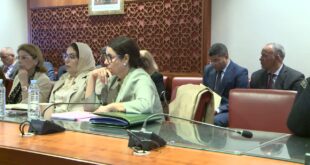
- Chaired by Third Deputy Speaker MP Abdellah Bouanou, the parliamentary sitting brought together lawmakers from both the governing coalition and the opposition t...
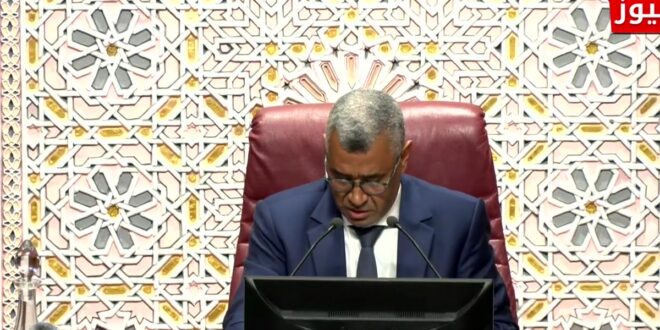
FEZ / RABAT (FesNews Media) — The preservation of Fez’s centuries-old Zellige tilework and the protection of Morocco’s artisanal heritage against foreign cultural appropriation took center stage on Monday, November 9, 2026, during the weekly oral questions session at the House of Representatives. Chaired by Third Deputy Speaker MP Abdellah Bouanou, the parliamentary sitting brought together lawmakers from both the governing coalition and the opposition to question Abdeljabbar Rachidi, Minister Delegate to the Minister of Tourism, Handicrafts, and Social and Solidarity Economy, regarding raw material shortages in Fez and international intellectual property safeguards.
Raising the operational challenges facing traditional ceramic and tile workshops in Morocco’s spiritual capital, MP Ammour Oumouloud of the Authenticity and Modernity Party (PAM) parliamentary group (Governing Majority) warned of an acute shortage of high-grade grey clay required for authentic Fez Zellige production. He stressed that the global prestige of Fez’s geometric mosaic artistry depends directly on securing uninterrupted access to raw materials and streamlining the complex administrative procedures governing quarry exploitation permits.
Dedicated Clay Quarries for Fez Artisans and Streamlined Licensing
Addressing Minister Delegate Rachidi, MP Oumouloud urged the government to coordinate closely with territorial authorities and mining regulators to open and license new dedicated clay quarries on the outskirts of Fez exclusively for traditional artisans and craft cooperatives. Lawmakers noted that rising transport costs and the scarcity of authorized extraction sites have placed heavy financial strain on hundreds of traditional workshops and kilns across the Fez-Meknes region, which employ thousands of specialized master craftsmen (Maâlems) and apprentices.
Parliamentary representatives emphasized that sustaining the handicraft economy in Fez requires structural upstream interventions rather than purely promotional exhibitions. Securing dedicated raw-material zones and eco-compliant artisanal industrial parks was highlighted as an urgent priority to keep manufacturing costs competitive while preserving the unique mineral composition that gives Fez Zellige its renowned durability and hand-chiseled precision.
Shielding Moroccan Zellige with Strict Origin Labels at UNESCO
From the opposition benches, MP Fatima Tamni of the Left Alliance Parliamentary Caucus (Groupement parlementaire de l’Alliance de la Gauche) spotlighted the geopolitical and cultural imperative of defending Morocco’s intangible heritage against recurring attempts at foreign plagiarism. She noted that several traditional Moroccan crafts—most notably Moroccan Zellige—have faced systematic attempts by external actors to claim or register Moroccan artistic patrimony at the United Nations Educational, Scientific and Cultural Organization (UNESCO).
MP Tamni called on the Ministry to reinforce sovereign legal defenses by systematically registering Origin Labels (Label d’origine) and international Geographical Indications for every branch of Moroccan craftsmanship. She further insisted that protecting heritage begins with elevating the socio-economic status of the Moroccan Master Artisan through comprehensive social protection, dignified working conditions, and formal institutional recognition of their role as custodians of ancestral geometric engineering.
Upgrading 199 Training Centers and Doubling Master Artisans’ Coaching Pay
Responding to the parliamentary interventions, Minister Delegate Abdeljabbar Rachidi affirmed the government’s commitment to protecting national artisanal supply chains and upgrading craft infrastructure nationwide. Addressing parallel concerns regarding the historic Oulja Pottery Complex in Salé, the Minister explained that within the framework of the Bouregreg Valley development project, a dedicated replacement zone in the Shoul district has been designated to relocate potters under modernized conditions, while specialized committees have conducted a comprehensive census of artisans affected by recent heavy rainfall and flooding.
On the human capital front, Minister Delegate Rachidi announced a major overhaul of Morocco’s artisanal vocational training network, which now encompasses 64 institutes and centers alongside 135 regional branches and annexes across the Kingdom. Crucially, to incentivize master craftsmen to pass down rare traditional skills to Moroccan youth through in-enterprise apprenticeship programs, the government has officially raised the compensation paid to supervising master artisans from 65 dirhams to 135 dirhams per training session, while expanding specialized craft training to 4,900 correctional facility inmates annually to support socio-professional reintegration.