Fes News Media Morocco & Fez-Meknes Independent English News Portal — 24/7 Coverage

- RABAT / FEZ (FesNews Media) — Official parliamentary annexes accompanying Morocco’s 2027 Finance Bill (Bill No
- 26) have laid bare structural financial and operational pressures inside state-owned urban developer Groupe Al Omrane (HAO), revealing in the Public Establishme...
RABAT / FEZ (FesNews Media) — Official parliamentary annexes accompanying Morocco’s 2027 Finance Bill (Bill No. 60.26) have laid bare structural financial and operational pressures inside state-owned urban developer Groupe Al Omrane (HAO), revealing in the Public Establishments and Enterprises Report (pages 66 and 170) that the public holding still carries a net book value of MAD 11.094 billion in finished-product inventory as of year-end 2025—including MAD 4.197 billion in unsold housing and land stock (invendus) despite more than two years of accelerated destocking campaigns.
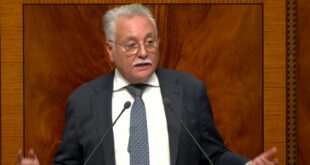
According to a detailed financial review conducted by FesNews Media based on Ministry of Economy and Finance disclosures, the public real-estate group chaired by Management Board President Housni El Ghazaoui remains reliant on an ongoing “cash liquidity preservation plan” focused on inventory liquidation and receivables recovery following its historic 2023 deficit, when consolidated net income plunged to minus MAD 1.170 billion and operating income fell to minus MAD 941 million. Furthermore, the report projects consolidated revenue to dip from MAD 5.872 billion in 2025 to MAD 5.702 billion at year-end 2026.
Financing Debt Surpasses Equity While Staff Costs Climb 15.15 Percent
Consolidated IFRS balance-sheet indicators published in Annex 9 (page 170) highlight a growing leverage imbalance at the 100-percent state-owned company: financing debt (dettes de financement) rose steadily from MAD 5.089 billion in 2023 to MAD 5.143 billion in 2024 before reaching MAD 5.617 billion in 2025, officially overtaking the group’s shareholders’ equity (fonds propres), which slipped from MAD 4.895 billion in 2024 to MAD 4.679 billion in 2025.
Over the same period, consolidated value added (valeur ajoutée) contracted by 21.5 percent from MAD 1.540 billion in 2024 to MAD 1.209 billion in 2025, while self-financing capacity (CAF) declined from MAD 344 million to MAD 271 million. Conversely, personnel expenses (charges de personnel) rose by 15.15 percent from MAD 528 million to MAD 608 million—nearly double the group-share net profit of MAD 314 million recorded in 2025 across a total asset base of MAD 68.937 billion.
Zero Dividends Paid to the State Treasury in 2025 and 2026 and Minimal Board Oversight
On fiscal returns to the public purse, Annex 6 (page 152) tracking dividends and contributions paid by state-owned enterprises to Morocco’s General Budget shows that Groupe Al Omrane contributed MAD 0.0 in executed 2025 budget revenues and MAD 0.0 in 2026 forecasts, with a tentative projection of MAD 220 million penciled in for 2027—even as public housing partnerships mobilized approximately 1,270 hectares of state-owned land in 2025 according to the Public Land Mobilization Report.
Governance metrics for the parent holding further indicate that Al Omrane’s Supervisory Board (Conseil de surveillance) convened just once per year across 2023, 2024, and 2025, while meetings of its Audit Committee (Comité d’audit) dropped from three sessions per year in 2023 and 2024 to a single meeting in 2025. Operationally, under Morocco’s flagship Direct Housing Aid program (page 66), Al Omrane completed only 4,550 housing units through its own direct operations, compared with 17,158 units delivered via private-sector partnerships.
Fez-Meknes Allocation Limited to MAD 50.96M for Riad Saiss Amid Parliamentary Scrutiny
At the regional level, the 2027 Regional Investment Distribution Memorandum (page 30) underscores a sharp contrast between Groupe Al Omrane’s projected national capital expenditure of MAD 11.399 billion for 2027 and its itemized footprint in the Fez-Meknes Region. For regional subsidiary Al Omrane Fès-Meknès (SAO FM), the only named urban development project listed is “Riad Saiss — Phases 1 and 2”, carrying a total cost of MAD 641.54 million but allocated just MAD 50.96 million in 2027 payment appropriations (under 8 percent of project cost) alongside a general MAD 451.2 million line for direct housing support.
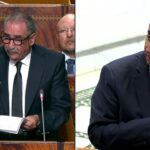
These official figures echo pointed questioning inside the House of Representatives’ Interior, Territorial Collectivities, Housing, and Urban Policy Committee, previously reported by FesNews Media regarding the “zero dirhams” allocated to new ministerial housing projects in Fez-Meknes, where lawmakers challenged advance payment demands of MAD 15,000 and MAD 60,000 and recurring delays in delivering serviced resettlement plots across Douar Slaliyine, Ain Smen, Bensouda, El Mellah, Sahb El Ward, Zouagha, Ouled Tayeb, and Sidi Harazem.