فاس نيوز ميديا جريدة الكترونية جهوية تعنى بشؤون و أخبار جهة فاس مكناس – متجددة على مدار الساعة

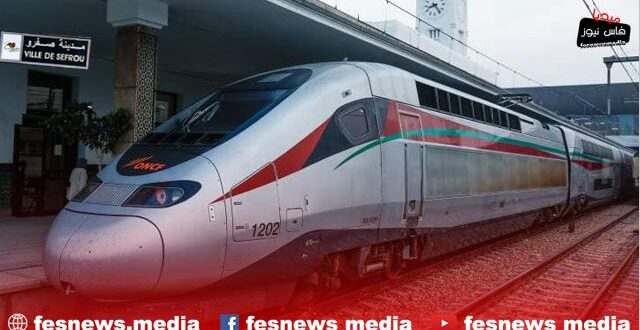
As part of efforts to strengthen the national railway network, the Minister of Transport and Logistics, Mohamed Abdeljalil, announced ambitious plans to link the traditional railway line connecting Fes and Meknes with the high-speed line to Kenitra. This project aims to enable the operation of قطارات “البراق”—Africa’s first high-speed train—on this segment at speeds below 160 km/h, reducing the need to change trains in Kenitra and improving connectivity between major cities. This article highlights the key details of this development, its potential benefits, and the challenges ahead.
Al Boraq: The Backbone of Modern Transport in Morocco
Since its launch in 2018, قطار “البراق” has marked a historic achievement as Africa’s first high-speed train. Currently, the line runs 323 kilometers between Tangier and Casablanca, with the train reaching speeds of up to 320 km/h on a dedicated track between Tangier and Kenitra. Between Kenitra and Casablanca, it operates on an upgraded traditional line with speeds ranging from 160 to 220 km/h. This hybrid model has significantly reduced travel time, with the journey from Tangier to Casablanca now taking about two hours instead of more than five previously.
However, travelers to Fes and Meknes currently must switch trains in Kenitra to use the traditional قطارات “أطلس” trains, prolonging the journey from Tangier to Fes to approximately 3 hours and 25 minutes. The new plan aims to address this challenge by allowing Al Boraq trains to operate directly on the traditional lines at lower speeds, offering seamless trips and reducing waiting times.
Integrating Fes and Meknes into the High-Speed Network
Minister Abdeljalil’s announcement is part of a broader strategy to enhance regional integration and improve connectivity between Moroccan cities. By permitting Al Boraq trains to run on traditional tracks between Fes, Meknes, and Kenitra, Morocco seeks to enhance transport efficiency without immediate large investments in building dedicated high-speed lines. This adaptive approach mirrors the existing arrangement between Kenitra and Casablanca, where Al Boraq operates on conventional tracks at limited speeds.
Projections suggest this integration will notably reduce travel times; for example, the trip from Fes to Rabat could drop from 3.5 hours to about 1 hour and 40 minutes once high-speed elements are introduced in the future. The journey from Tangier to Fes may also decrease to around 2.5 hours instead of the current 3 hours and 25 minutes, by eliminating train changes in Kenitra.
Ambitious Vision for the Railway Network
This initiative aligns with Morocco’s ambitious vision to develop an advanced railway network by 2040, as announced by King Mohammed VI. The plan aims to expand the high-speed network to 1,300–1,500 kilometers, serving 43 cities and covering 87% of Morocco’s population. Key projects include the 430-kilometer Kenitra-Marrakech extension, which began construction in April 2025 and is expected to reduce travel time between Tangier and Marrakech to 2 hours and 40 minutes. Future expansions to Agadir are also planned, enhancing southern regional connectivity.
These projects require substantial investments, with the Kenitra-Marrakech line alone estimated at around 96 billion Moroccan dirhams (10 billion USD), including the acquisition of 168 new trains and the development of industrial environments supporting 40% local manufacturing. Partnerships with global companies such as Alstom and Hyundai Rotem back these efforts, alongside creating thousands of jobs.
Challenges and Opportunities
Despite the benefits, integrating Fes and Meknes faces significant challenges, especially financing. Estimates indicate that expanding the network to 5,100 kilometers of new lines would cost 39 billion USD, necessitating private sector participation. Environmental considerations are also crucial, as projects aim to promote low-carbon mobility in line with sustainable development goals.
On the other hand, this integration is expected to boost tourism and trade in the imperial cities of Fes and Meknes, which are important cultural and economic hubs. It will also strengthen links with the Atlantic Corridor, supporting overall economic growth.
Travel Time Comparison Table
| Route | Current Time | Expected Time | Notes |
|---|---|---|---|
| Fes to Rabat | ~3.5 hours | ~1 hour 40 minutes | Via planned high-speed line |
| Fes to Casablanca | ~4 hours | ~2.5 hours | With Al Boraq direct on traditional tracks |
| Meknes to Kenitra | ~2 hours | ~1 hour | Possible with Al Boraq at lower speed |
| Tangier to Fes | ~3 hours 25 minutes | ~2.5 hours | Eliminates train change in Kenitra |
| Fes to Marrakech | ~7 hours | ~3 hours 40 minutes | Via Kenitra-Marrakech extension |
The announcement of integrating traditional lines in Fes and Meknes with the high-speed network is a strategic move reflecting Morocco’s commitment to modern, sustainable infrastructure development. By adaptively utilizing existing infrastructure, Morocco seeks to improve regional connectivity while awaiting dedicated high-speed line construction. With ongoing investments and international partnerships, Morocco’s railway network remains a leading model of modern transport in Africa, offering promising potential to enhance economic and social development.
Source: فاس نيوز (Fes News)