فاس نيوز ميديا جريدة الكترونية جهوية تعنى بشؤون و أخبار جهة فاس مكناس – متجددة على مدار الساعة


In the framework of the political and diplomatic momentum initiated by Morocco’s Minister of Foreign Affairs, African Cooperation and Moroccan Expatriates, Nasser Bourita, during his European tour in April, the minister has expanded these efforts to include Western Balkan countries, reflecting His Majesty King Mohammed VI’s vision to strengthen international support for Morocco’s Sahara and its 2007 autonomy initiative.
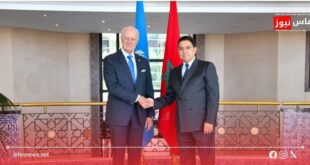
Bourita’s visit to Skopje, the capital of North Macedonia, featured in-depth discussions with his North Macedonian counterpart, Timcho Mucunski, culminating in the signing of a joint declaration in which North Macedonia clearly affirmed its support for Morocco’s autonomy initiative as the sole basis for a political solution to the regional dispute over Western Sahara. This position represents significant progress, reinforcing the international trend toward a political settlement anchored in Morocco’s territorial sovereignty and unity.
The talks also reaffirmed commitment to the UN-led process, endorsing Security Council Resolution 2756 of October 2024, and emphasized the crucial role of the UN Secretary-General’s Personal Envoy in achieving a realistic, lasting, and consensual political solution.
This supportive stance from North Macedonia aligns with a growing international momentum driven by Morocco since early 2025, which has seen several countries withdraw recognition of the fictitious entity and a broadening endorsement of the autonomy plan by over 116 countries, including 22 EU member states, accompanied by concrete steps such as opening consulates in southern provinces and supporting major development projects.
Bourita’s visit underscores a new phase in the Sahara dossier focused on practical, constructive solutions, while isolating parties maintaining rigid positions that are out of touch with ongoing political and diplomatic developments.
Moreover, the visit strengthens Morocco’s presence in the Western Balkans and clearly reflects the strategic vision of Moroccan diplomacy, guided by His Majesty King Mohammed VI’s directives and successful initiatives on the ground in the southern provinces.
In a related development, North Macedonia’s President Gordana Siljanovska-Davkova received the Moroccan Foreign Minister in an official setting, highlighting the depth of bilateral relations and shared desire to enhance political, economic, and diplomatic cooperation.
This latest diplomatic advance signals the continuation of Morocco’s sustained efforts to build broad international support for its territorial integrity by forging strong and inclusive alliances and adopting balanced political solutions that ensure security and stability in the region.