Fes News Media Morocco & Fez-Meknes Independent English News Portal — 24/7 Coverage


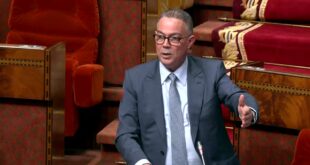
- RABAT (FesNews Media) — Morocco’s Minister of Economy and Finance Fouzi Lekjaa announced before the House of Representatives on Saturday, November 14, 2026, tha...
- Speaking during the government’s plenary reply ahead of the vote on Part One of the 2027 Finance Bill, Lekjaa confirmed that raising the minimum monthly pension...
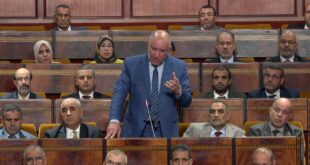
RABAT (FesNews Media) — Morocco’s Minister of Economy and Finance Fouzi Lekjaa announced before the House of Representatives on Saturday, November 14, 2026, that Parliament will receive two landmark draft laws next week following Cabinet approval to raise the minimum retirement pension to 1,700 dirhams per month starting January 1, 2027 for 500,000 retirees, while increasing widows’ survivor pensions from 50 percent to 100 percent for 431,000 widows at an annual budgetary cost of 10 billion dirhams.
Speaking during the government’s plenary reply ahead of the vote on Part One of the 2027 Finance Bill, Lekjaa confirmed that raising the minimum monthly pension to 1,700 dirhams in January 2027 marks the initial step of a legally binding trajectory set to reach 3,000 dirhams by 2031, thanking lawmakers across the aisle who contributed to refining both social protection measures aimed at lifting vulnerable households out of precarity.
Income Tax Exemption Threshold Raised to 60,000 Dirhams for the Middle Class
Addressing middle-class wage earners and civil servants facing persistent cost-of-living pressures, the Finance Minister detailed the progressive overhaul of Morocco’s Personal Income Tax (IR) scheduled between 2027 and 2031, which raises the tax-free annual net income threshold from 40,000 dirhams to 60,000 dirhams while streamlining marginal tax brackets to 10 percent, 20 percent, and 30 percent.
Lekjaa explained that retaining the 30 percent bracket is a transitional measure that the executive intends to phase down toward 20 percent in alignment with the corporate tax rate applied to companies generating under 100 million dirhams in net profit, noting that the income tax cut represents a fiscal effort of 5.5 billion dirhams in 2027 and 21 billion dirhams by the end of the five-year term, delivering a net monthly gain of 500 dirhams for eligible middle-class earners.
Candidly acknowledging that an extra 500 dirhams per month alone cannot resolve every household expense facing middle-income families, the minister recalled that previous rounds of national social dialogue historically yielded monthly increases between 300 and 600 dirhams, arguing that mobilizing 21 billion dirhams in direct tax relief constitutes a substantial boost to disposable household income.
One Billion Dirhams to Overhaul Wholesale Markets, Meat and Fish Supply Chains
Emphasizing that protecting purchasing power requires reforming market structures alongside raising incomes, Lekjaa warned that excessive intermediary layers and repeated resales without economic value depress farm-gate earnings for producers while inflating retail prices paid by Moroccan consumers.
To eliminate speculative bottlenecks, the 2027 Draft Finance Bill allocates 1 billion dirhams to modernize municipal wholesale markets, establish regional agricultural aggregation and marketing companies in major farming basins, and restructure supply, cold-storage, and transport chains for red meat and fish products to ensure full transparency in price formation.
Measuring Reform by Lower Consumer Prices Rather Than New Bureaucracy
Concluding the purchasing-power chapter of his address, the Finance Minister stressed that the success of the distribution overhaul will be judged strictly by lower retail prices for consumers, fairer margins for farmers and fishermen, and higher service quality rather than the mere creation of new corporate structures, backed by binding regulatory oversight against market monopolies.